
Article

How one infusion nurse's attention to detail saved a patient's life

A small shift in behavior can be an early warning sign. In this case, it helped an attentive nurse spot and respond to a pediatric PANDAS patient in crisis.

April 21, 2026 | 2-minute read

In this article

The power of knowing a patient in home-infusion care

When pediatric patient Sophia suddenly went quiet during a home infusion visit, Optum® Infusion Pharmacy nurse Courtney immediately sensed something was wrong. Silence was not Sophia’s normal behavior, so that small change told a much larger story.

Sophia was choking.

Courtney reacted instantly. Although she had responded to many medical emergencies in her career, she had never performed the Heimlich maneuver. Instinct and training took over. After a few abdominal thrusts, the obstruction finally cleared.

Her quick thinking prevented a life‑threatening emergency and highlighted the critical role home‑based clinicians play in caring for people with complex conditions.  
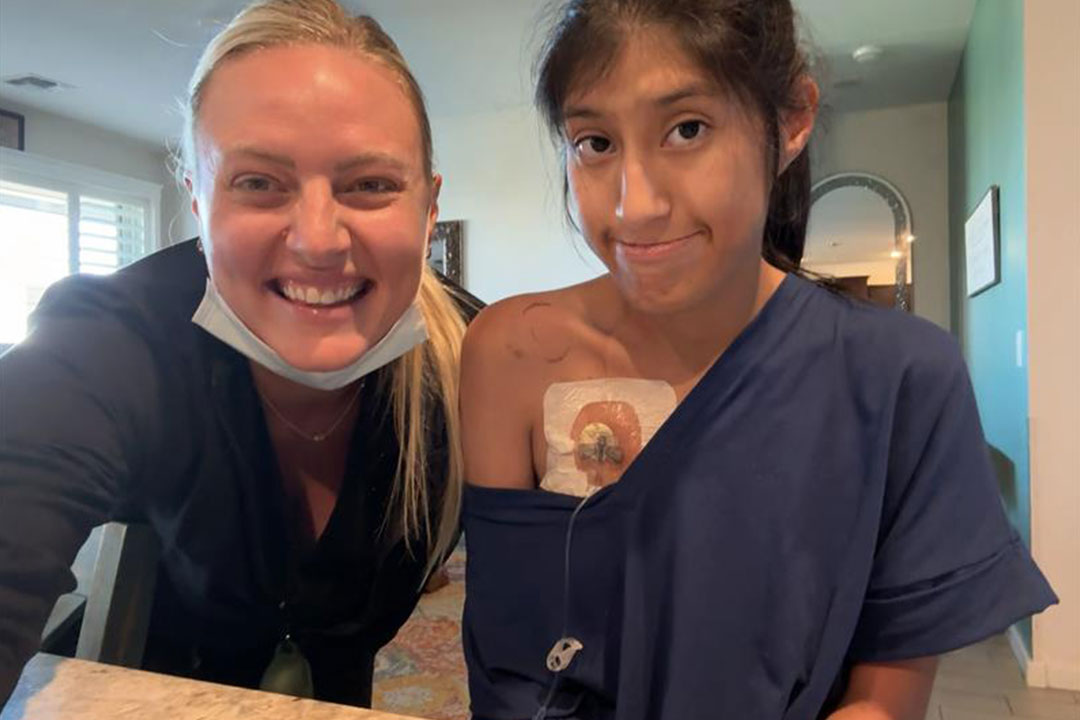
Optum Infusion Pharmacy nurse Courtney with patient Sophia.

Optum Infusion Pharmacy nurse Courtney with patient Sophia.

A window into a family’s fight for PANDAS care

For Sophia’s family, this was another moment in a long journey. They avoided a crisis, but the broader work of securing access and stability continued.

Families navigating complex, rare conditions like PANDAS (Pediatric Autoimmune Neuropsychiatric Disorders Associated with Streptococcal infections) often face years of:

  • Searching for answers
  • Inconsistent access to treatment
  • Living with the stress that comes with uncertainty

Care typically requires coordination across specialists, pharmacies and other support services.

That’s where strong partnership matters. Optum Infusion Pharmacy helps families:

  • Understand their options
  • Maintain continuity of care
  • Receive therapies safely at home

For many, having a clinical team of pharmacists and nurses who know the patient’s baseline, and can notice small changes before they escalate, is key to staying stable day-to-day.  

Instinct, expertise and the realities of rare disease care

For Courtney, this moment reinforced the importance of knowing a patient’s baseline. Noticing the absence of a typical behavior allowed her to act before the situation escalated. She also stressed how important it is for everyone, not only clinicians, to know how to perform the Heimlich maneuver.

This wasn’t the only moment Courtney made a difference for Sophia. She has been with the family throughout their care journey for years, troubleshooting challenges, offering guidance and showing up again and again as they work to secure the treatment Sophia needs.

This story shows the differentiated pharmacy experience Optum provides — care that blends clinical skill with ongoing advocacy to be sure families never face complex journeys alone.

PANDAS is a rare disorder affecting a small subset of pediatric patients who develop acute neuropsychiatric symptoms after a strep infection. PANDAS is associated with sudden changes in a child's mood, behavior and functional activity.  

Related healthcare insights

View all pharmacy care insights
How In-Home Support Reopened Access to Infusion Therapy

Article

How in-home support reopened access to essential infusion therapy

When a breakdown in care left a patient without essential IV nutrition, learn how Optum Infusion Pharmacy stepped in with a new approach.

Subscribe to Pharmacy Provider Pulse Quarterly Newsletter

Subscribe to Optum Pharmacy Provider Pulse Quarterly Newsletter

Stay up to date on our Specialty and Infusion Pharmacy offerings and get important industry developments delivered directly to your inbox.

Celebrating the Unique Role of Optum Infusion Pharmacy Nurses

Article

Celebrating the unique role of Optum Infusion Pharmacy nurses

On average, Optum Infusion nurses spend approximately 1,300 hours per year providing care to patients. Hilary, an Optum Infusion nurse, knows this firsthand.