Article

The big 4: Which drug classes are driving spending?

Rising pharmacy costs extend far beyond GLP-1s. Inflammatory conditions and oncology therapies continue to drive significant spend.

April 6, 2026 | 7-minute read

The modern pharmaceutical market changes fast, with new medications seeming to arrive daily. And since new drugs tend to cost more than old drugs, overall spending continues to rise.

While the array of drugs is ever widening, the top categories in drug spend seem to be constant. Drugs used for inflammatory conditions, oncology, obesity and diabetes consistently rank as the top drivers of increased prescription drug spending.

Which is not to say that these categories are static. In fact, the composition of drugs and pricing dynamics within these categories is constantly changing. Alongside new class entrants and expanding generic and biosimilar alternatives, government price negotiations are also reshaping the contours of these classes.

While the specifics of each category differ, they retain one common feature: large patient populations paired with expensive medication options.

1. Inflammatory conditions

The inflammatory conditions class encompasses a range of diseases typified by when the immune system mistakenly attacks healthy tissue in the body. While there are more than 100 known autoimmune disorders (AD), the most common conditions include psoriasis, inflammatory bowel disease, multiple sclerosis and rheumatoid arthritis.1

The prevalence of autoimmune disorders is hard to overstate, with an estimated 15 million Americans (4.6% of the U.S. population) currently diagnosed with an AD.2 Moreover, since some ADs can share the same environmental or genetic risk factors, certain individuals can suffer from multiple autoimmune conditions at the same time.

In addition to the number of people who suffer from one or more of these conditions, the cost of treatment also drives spending in inflammatory conditions, as biologic drugs are commonly used for many ADs. Derived from living cells or through biological processes, biologics drugs are expensive. While they represent only 5% of annual prescriptions, they accounted for 51% of total drug spending, as of 2024.

Notably, the biologic drug Humira® (adalimumab) — which is indicated for multiple ADs, including rheumatoid arthritis, ulcerative colitis and Crohn’s disease — is the highest grossing drug in history, garnering $200 billion in sales.

Biosimilars: biologic competitor drugs

Fortunately, a new wave of biologic competitor drugs, called biosimilars, have come to market. Biosimilars are approved according to the same standards of quality, safety and efficacy as approved biological medicines. The benefit is that biosimilars can cost, on average, up to 50% less than the originals.

Optum Rx has led the way in promoting the use of biosimilars to lower costs in the inflammatory conditions class. As of January 1, 2025, Optum Rx has preferred FDA-approved interchangeable adalimumab biosimilars on commercial formularies. As a result, plan sponsors are realizing up to 83% savings per prescription compared to Humira’s list price.
2. Oncology drug category

Cancer costs continue to rise, and the causes will sound familiar: high-priced drugs paired with a rise in the number of people diagnosed. As advances in cancer screening and detection continue, an estimated 2 million Americans were diagnosed with cancer last year. 

Even more than the autoimmune category, oncology covers a multitude of conditions, with over 200 distinct types of cancer.3

While cancers are defined by genetic changes that cause cells to grow uncontrollably, cancer treatments are often grouped by function. Different drugs are used to slow, stop or eliminate the cancer. Others are used as palliative and supportive care to manage symptoms and side effects. We’re addressing these groups together.

With the prevalence of cancer on the rise, one bright spot is that people with cancer are living longer, with the cancer death rate in the U.S. falling by 34% between 1991 and 2023.4 Much of this improvement is attributable to advances in prevention, early detection and treatment options.

Yet these advances come at a cost. In 2023, 95% of new anticancer therapies launched at a price exceeding $100,000 per year.5 However, biosimilar alternatives to longstanding branded cancer drugs, such as Avastin®, Rituxan® and Herceptin®, have entered the market. By exerting downward price pressure on these frequently used branded cancer therapies, these biosimilars are helping to slow the growth rate in oncology spending.

Government price negotiations

An emerging factor in oncology pricing is the role of government price negotiations. Under the Inflation Reduction Act of 2022, the Centers for Medicare & Medicaid Services (CMS) is required to annually negotiate prices directly with manufacturers for some of the most expensive and widely used prescription medicines.

Used to treat blood cancers, Imbruvica® was one of the 10 medicines selected by CMS for price negotiation in 2026.6 Moreover, 3 cancer medicines are among the 15 drugs selected for price negotiation in 2027.7

3. Diabetes drug category

Often diagnosed in childhood, Type 1 diabetes is an autoimmune condition that occurs when the immune system attacks insulin-secreting cells in the pancreas. Type 2 diabetes is a metabolic condition where the body resists insulin. It often develops gradually over years. 

Of the 40 million U.S. adults with diabetes, up to 95% of have type 2 diabetes.8 While treatment for type 1 diabetes historically centers around insulin therapy, treatment for type 2 diabetes varies widely and includes everything from metformin and SGLT2 inhibitors to GLP-1 receptor agonists, as well as lifestyle interventions like diet and exercise.

As the number of people with diabetes keeps growing, the sheer size of the group continues to generate significant spending. In addition to spending on medications, medical costs related to diabetes can be significant. Notably people with diabetes often have comorbid conditions, such as heart disease, vision problems and kidney disease. As a result, people diagnosed with diabetes incur annual medical expenditures 2.6 times higher than those without diabetes.

Optum Rx Diabetes Management Program

Understanding the need for holistic care, the Optum Rx Diabetes Management program engages members through consults with pharmacists who are certified in diabetes management. They conduct medication reviews and coach patients on:

  • Medication adherence
  • Diet
  • Nutrition
  • Lifestyle modifications

Members may be eligible to receive a cloud-based glucose meter or continuous glucose monitor. By proactively managing disease progression, the program can generate better health outcomes for participants and savings for plan sponsors.

Participating clients enrolled in the full program for a minimum of 12 months saw savings of $3.27 per member per month— more than $1,000 per counseled member.9

4. Obesity drug category

Though it shares some treatment options with diabetes, obesity has become a separate and rising source of prescription drug spending requiring active management.

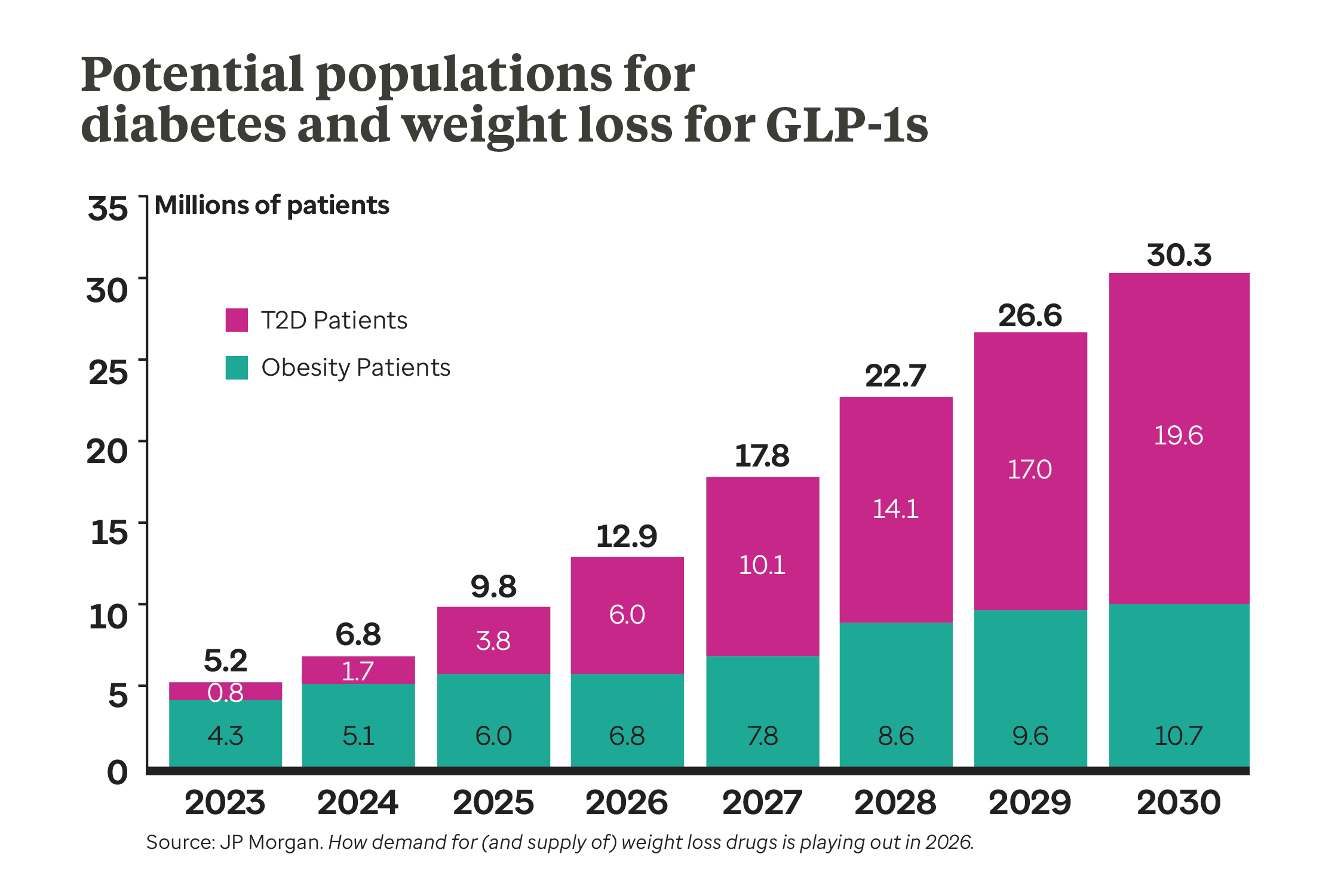
Since the approval of Wegovy® in 2021, interest in using GLP-1 drugs for weight loss has exploded into the public consciousness. With approximately 42% of U.S. adults considered obese, the potential user base is vast and spending on GLP-1s for weight loss is growing much faster than spending on those indicated for diabetes.10

Potential populations for diabetes and weight loss GLP-1s

Now, a new inflection point is approaching as oral GLP-1 medications designed for weight loss are entering the market. These oral medications provide additional options, particularly for patients who are unwilling or unable to use injectable treatments.11

What’s more, recent federal actions on GLP-1 pricing have created new uncertainties. While these actions are aimed primarily at Medicare, they'll eventually reverberate in the commercial market, further complicating the decision to cover GLP-1s under the pharmacy benefit.

Given the complex and evolving nature of GLP-1s for obesity, plan sponsors need a strategic partner with the capabilities to provide options and management strategies to help balance cost and use of GLP-1s. That’s why Optum Rx has introduced a host of changes to ensure GLP-1 drugs are used responsibly, including optional utilization management (UM) and enhanced system edits.

Optum Rx Weight Engage

We’ve also developed an innovative new weight management solution called Optum Rx Weight Engage. This suite of programs leverages virtual care to provide healthy diet and activity planning, as well as other types of health coaching. Optum Rx Weight Engage formulary and benefit strategies deliver financial sustainability while ensuring highly motivated participants have a durable weight-loss outcome. 

Maintaining affordable pharmacy benefits

The pharmacological and demographic factors driving growth in the “Big 4” drug classes won't be subsiding any time soon. Optum Rx stands ready to help your organization enact futureproof strategies for these classes to better manage rising demand while maintaining benefit affordability and delivering high‑quality care. 

Related healthcare insights

View all
The Facts About Pharmacy Benefit Managers

Article

The facts about pharmacy benefit managers

There are many misconceptions of pharmacy benefit managers (PBMs) and their services. Here are the facts.

A Seamless Pharmacy Benefit Change? [Case Study]

Case study

A seamless pharmacy benefit change?

We guarantee it. And it's easier than you think.

Optum Rx: Relentless Prep, Strong 2026 Implementations

Article

Relentless preparation leads to a strong 2026 implementation

We delivered a seamless 1/1 transition for over 800 new clients with strong service, stable operations and improved member experiences.

Sources

  1. Journal of Clinical Investigation. Estimation of prevalence of autoimmune diseases in the United States using electronic health record data. Accessed March 23, 2026.
  2. Ibid.
  3. Cancer Research Institute.Exploring the Different Types of Cancer and Treatment Options. Accessed March 23, 2026.
  4. Cancer Research Research. AACR Cancer Progress Report 2025: Unifying Cancer Science and Medicine: A Continuum of Innovation for Impact. Accessed March 23, 2026.
  5. Nature Reviews Clinical Oncology. The high costs of anticancer therapies in the USA: challenges, opportunities, and progress. Accessed March 23, 2026.
  6. Centers for Medicare & Medicaid Services. Medicare Drug Price Negotiation Program: Selected Drugs for Initial Price Applicability Year 2026. Accessed March 23, 2026.
  7. Centers for Medicare & Medicaid Services. Medicare Drug Price Negotiation Program: Selected Drugs for Initial Price Applicability Year 2027. Accessed March 23, 2026.
  8. Centers for Disease Control and Prevention. National Diabetes Statistics Report. Accessed March 23, 2026.
  9. Optum Rx internal analysis, 2025.
  10. The National Institute of Diabetes and Digestive and Kidney Diseases. Overweight & Obesity Statistics. Accessed March 23, 2026.
  11. The National Institute of Diabetes and Digestive and Kidney Diseases. Overweight & Obesity Statistics. Accessed March 23, 2026.

Originally published: May 10, 2024