
Preparing your plan for the GLP-1 era
New pills and indications are coming
The GLP-1 revolution continues
Analysts estimate GLP-1 pills could generate $22 billion annually by 2030, capturing 24% of the global weight loss market.1 For plan sponsors, the arrival of oral options means usage could grow, reinforcing the need for comprehensive utilization-management strategies.

Drugs expected to treat more than obesity
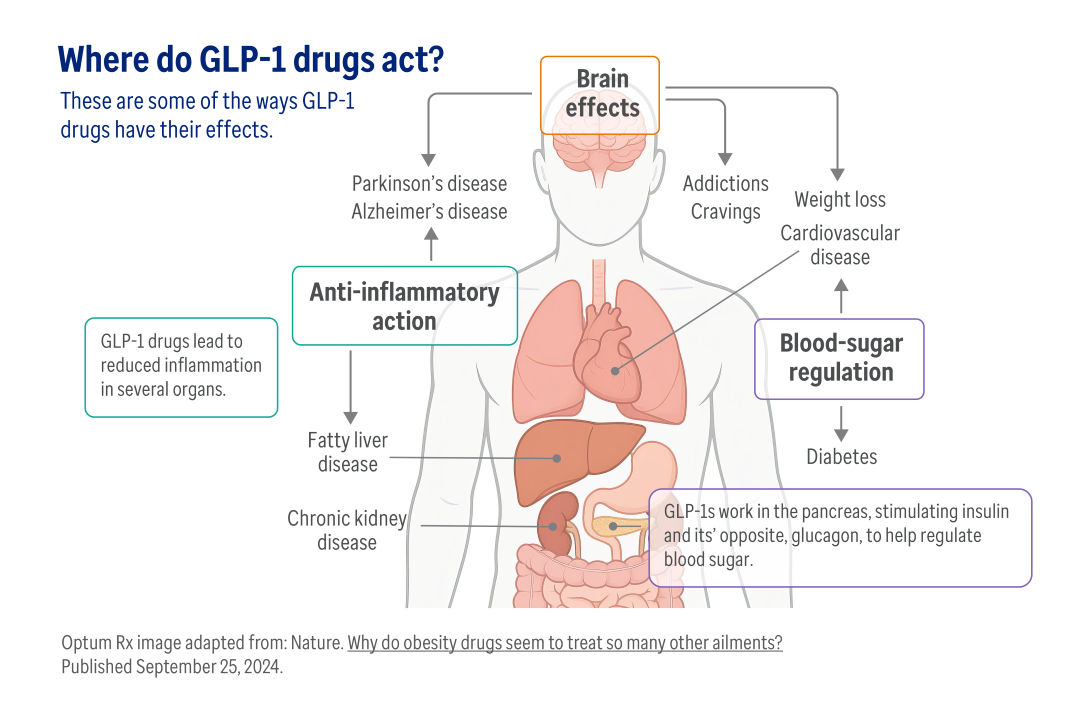
GLP-1s: Real-life wonder drugs?
Just as important as the wave of new drugs for obesity is the expansion into other therapeutic areas. Recent clinical trials have examined treatment for Alzheimer’s, arthritis, and more. Usage of this class will only expand in the coming years.
Guiding plan sponsors through complex change
Unpacking recent federal action on GLP-1s
In November 2025, the White House announced a multi-pronged strategy to implement Most Favored Nation (MFN) pricing for GLP-1 drugs. Our team examined what the policy means and is continuing to monitor new developments.

What employers need to know
Balancing GLP-1s cost and coverage
In a recent Optum Rx survey, employers said they are largely accepting of GLP-1s use for diabetes and weight loss, but some felt unprepared for the surge in usage. Most employers agree that offering coverage of these drugs is important for employee retention.

What physicians are saying
Navigating barriers to patient access to GLP-1s
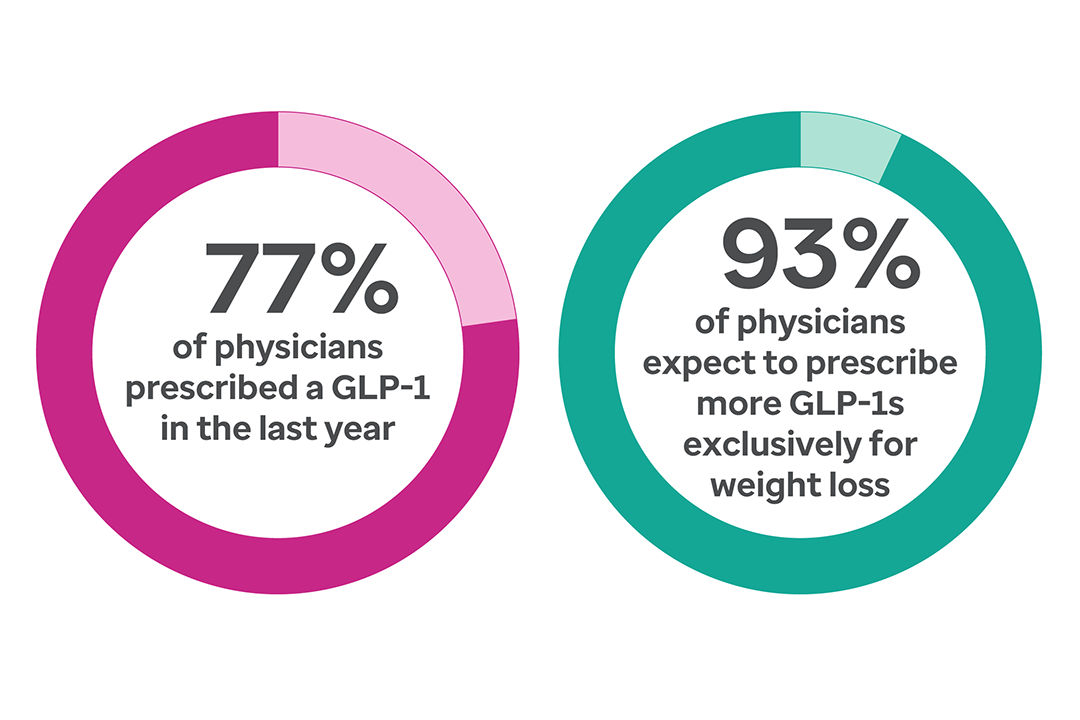
In a recent Optum Rx survey, 77% of physicians said they had prescribed a GLP-1 in the past year, while 93% said they expect to prescribe more GLP-1s for weight loss going forward.2 While physicians are excited to have an effective tool for patients struggling with obesity, many are concerned with the long-term use of these drugs, noting side effects and cost are top reasons for patients who discontinue treatment.
Key benefits
With an increased demand for GLP-1s, plan sponsors need an innovative weight management solution to reduce costs and improve outcomes.
Appropriate utilization
Plans have the option to cover the most at-risk obesity populations only. Guide members to achieve and sustain their weight loss goals with clinical programs designed to support responsible use of GLP-1 drugs.
Enhanced system edits
Control utilization so anti-obesity medications are only used by those who meet the criteria defined by the plan.
Member support programs
Help permanently change the behaviors contributing to obesity through behavioral support, personalized diets and exercise.
Provider guidance
Obesity specialist physicians determine an individualized weight loss plan for each member and connects them with a weight loss care team.

Strategize about anti-obesity drugs
Learn how our weight management strategies can help your organization. Contact your Optum Rx representative or complete our online form.
Industry insights

Article
New pills and expanded indications are poised to alter the dynamics of GLP-1 costs and treatments.
Our report emphasizes new, next-gen and first-in-class treatments for cystic fibrosis, non-opioid treatment and GLP-1 drugs.
Complementary solutions
 Solution suite
Aligned to scale with your pharmacy benefit needs
Our pharmacy benefit solutions are aligned to your priorities, not the other way around. We work towards them, together.
Solution suite
Smart tech and AI for faster, safer, lower cost pharmacy benefits
Optum Rx AI and advanced technologies automate work, cut costs and fix issues early. Clients, members and providers get simpler experiences from start to finish.
Solution suite
Open Book: Delivering transparent pharmacy benefits
Transparency is how we operate on a daily basis, from independent clinical decisions to pass-through economics and real-time clarity at the point of care.
- CNBC. 2026 is the year of obesity pills from Novo Nordisk, Eli Lilly. Published January 10, 2026. Accessed January 15, 2026.
- Optum Rx, Strategic Insights. GLP-1 Audience Exploration. Published March 2024.