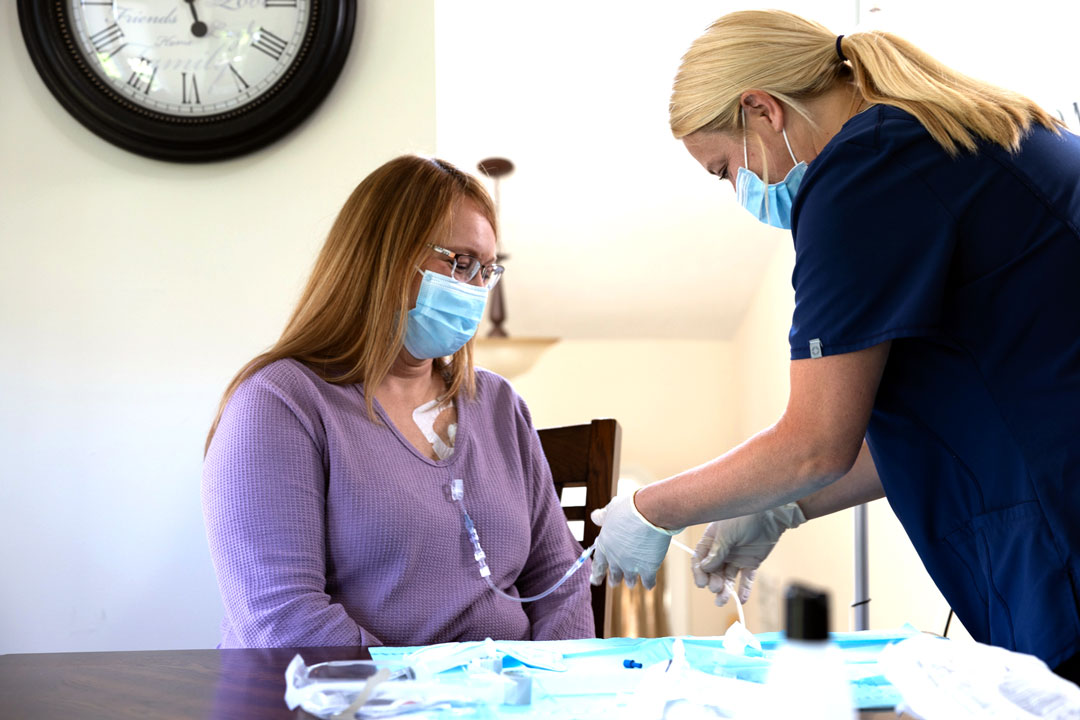
Just like food and energy costs, healthcare costs have increased dramatically over the last 2–3 years, putting significant pressure on infusion providers. Infused medications can be more costly than oral or injectable medications, as they require sterile compounding by a qualified pharmacy, specialized clinicians to support home administration and rigorous clinical in partnership with the prescriber. Further, some infused products, like immunoglobulin, are developed from human blood, a complex and expensive process requiring thousands of plasma donors in addition to special handling and storage. These products are also subject to strict regulatory requirements that add to operating costs.
Shortages of critical medications, disposable infusion supplies and ingredients for PN have made the situation worse over the last decade. In 2021, shortages in essential infusion products such as drugs, pumps and disposables, catheter care and supplies needed for compounding led to average annual cost increases of nearly 10%, double the normal rate. The cumulative five-year price increase per bag or one day dose of PN is more than 50% higher than it was in 2016.4 This poses a significant challenge for providers who are paid a flat per diem or per day rate for the standard ingredients and supplies in PN. Shortages are stressful for patients, who worry about whether they will receive the nutrients they need or if a provider will be available, and pharmacy staff, who spend hours trying to source needed items from a limited supply chain.
Workforce shortages in nursing are further driving up costs. More than 100,000 nurses left the workplace between 2020 and 2022 due to the stress of the COVID-19 pandemic, and 610,000 more plan to leave by 2027.5 As a result, both hiring and turnover rate costs for qualified nurses have risen dramatically.
But these costs must be paid. The importance of qualified nurses to infusion therapy cannot be overstated. Infusion therapy is labor-intensive at both the pharmacy and at the patient’s home or infusion suite. Clinical management of patients is as critical to the success of therapy as the infused medications. Without proper nursing expertise, there is a higher risk of medical mistakes and infusion-related complications. Optum is making strategic investments in nursing, including higher compensation, free access to courses required for infusion licensure and reimbursement for obtaining and maintaining advanced certification. But more must be done system wide to address the rising costs.
Even as costs to deliver infusion pharmacy care have risen dramatically, there is increasing pressure from health system payers to reduce reimbursement. As high-deductible health plan enrollments increase, the challenge is that the impact of reduced reimbursement falls most heavily on the patients who rely on these costly, life-sustaining therapies. If payers do not take the higher costs of providing infusion therapy into account in their reimbursement structure, patients are at risk of receiving lower quality service or losing service altogether. When outpatient and home infusion therapies are not available or covered, hospitalizations go up, significantly increasing the cost of care and the risk for hospital-associated infections.