
Case study

From complexity to clarity: Dashboard streamlines Medicaid SUD program

Virginia’s new Medicaid analytics dashboard centralizes SUD data, improving treatment strategies and reporting for vulnerable communities.

October 6, 2025 | 4-minute read

Data that drives impact

Substance use disorders (SUDs) affect millions of Americans, impacting individuals, families and communities. State and local investment in SUD treatment is essential, as it supports vital services like inpatient rehabilitation and outpatient counseling provided by specialized facilities and community programs.

By investing in treatment infrastructure and expanding access through Medicaid and other public programs, states can lower long-term healthcare costs, improve public safety and support recovery for individuals and families affected by substance use. Yet providing these resources is difficult. 

State policymakers must gather data from multiple often disconnected systems to understand the local impact of substance use disorders. With improved data coordination, states can strengthen community efforts to prevent substance misuse, expand treatment capacity and help vulnerable populations.
The challenge

To support the growing need for addiction treatment services offered by the state of Virginia’s Medicaid program, the Healthcare Analytics Division (HAD) team at the Department of Medical Assistance Services (DMAS) sought a more robust approach to manage and analyze critical data for its Medicaid Addiction and Recovery Treatment Services (ARTS). 

This program provides a continuum of treatment services — including community-based care, inpatient detoxification and residential SUD treatment — for Medicaid, Family Access to Medical Insurance Security (FAMIS) and FAMIS MOMS beneficiaries.

Recent Medicaid expansion has necessitated more specific performance metrics and comprehensive reporting by states to the Centers for Medicare & Medicaid Services (CMS). But Virginia’s existing data processes for Medicaid reporting were fragmented and complex, making it difficult for users to access, interpret and report on key information. 

Given the state’s existing relationship with Optum, it made sense for DMAS to engage the Optum Enterprise Data Warehouse (EDW) team in developing an automated solution that would streamline CMS reporting and data uploads to enhance efficiency and data transparency.

The solution

Before partnering with the Optum EDW team, DMAS analysts used complex queries to generate summary reports for tracking CMS metrics related to Medicaid members in the ARTS program. The process was time-consuming, and staff with limited technology experience often found it difficult to collect and interpret the necessary information.

The ARTS Datamart and Dashboard that Optum developed addresses these issues. Launched in April 2025, this specialized repository captures critical information about VA Medicaid ARTS members with substance use disorders. 

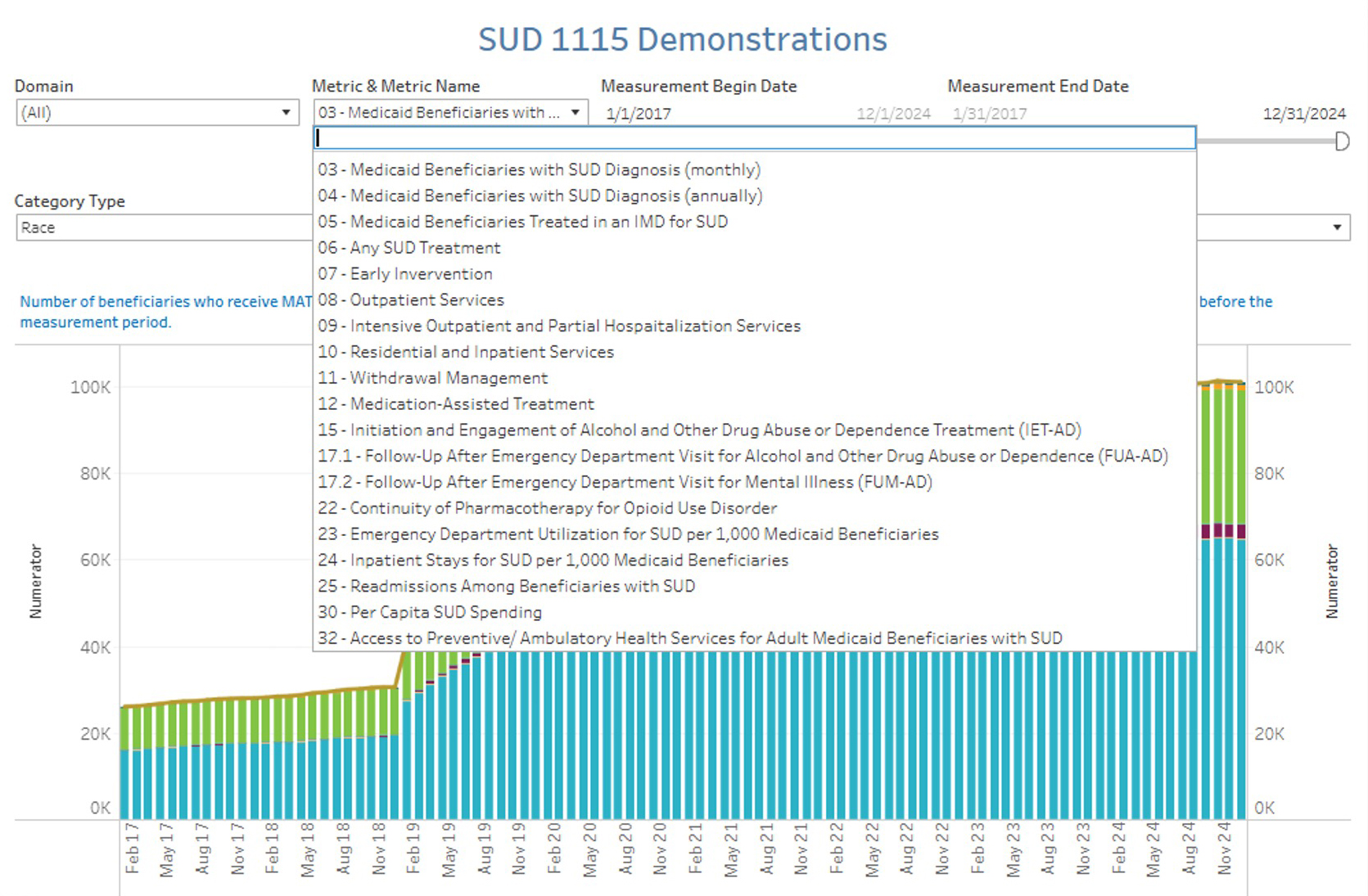
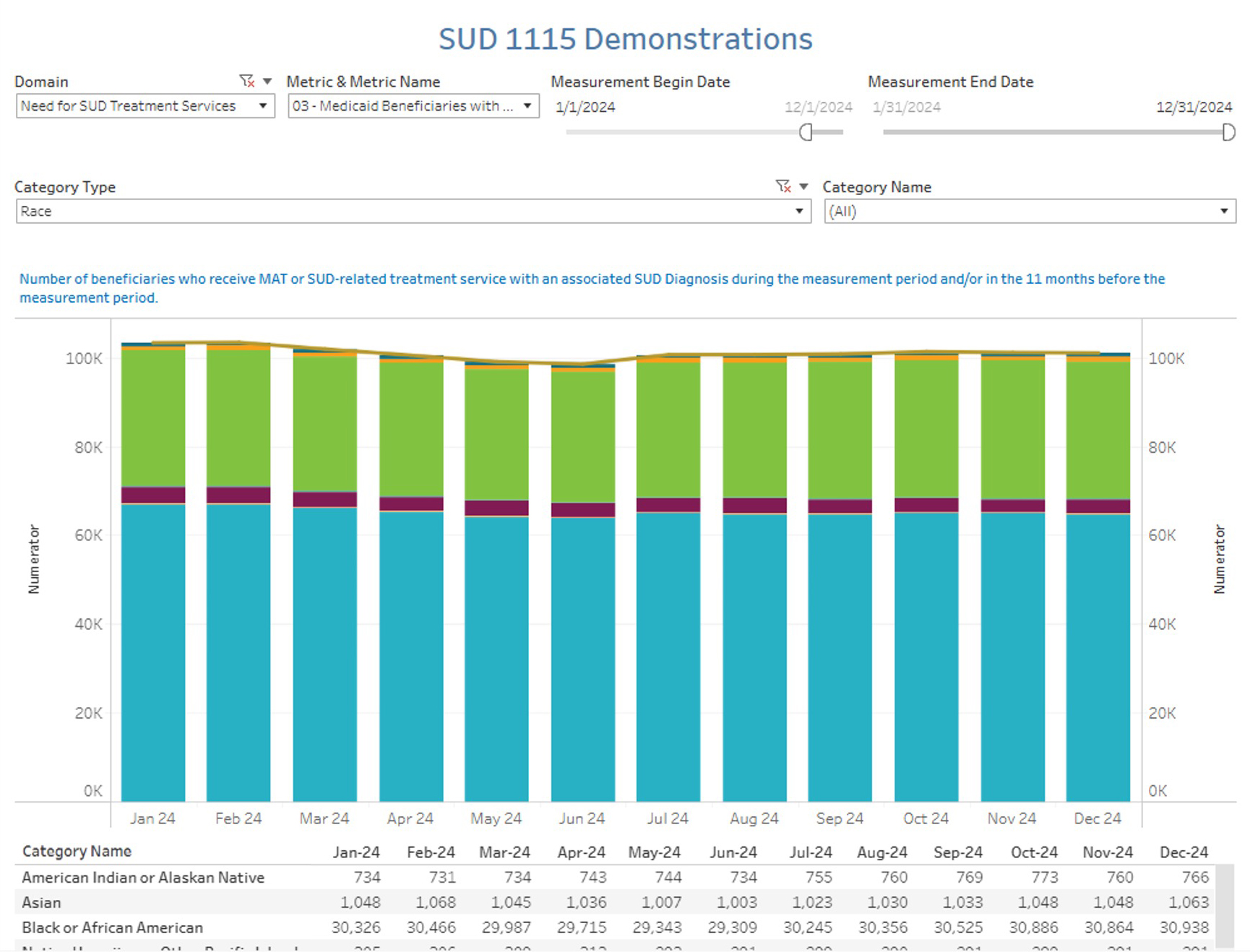
The dashboard tracks extensive metrics and provides targeted reporting, including state and CMS summaries. It also converts filtered data into actionable insights for program evaluation and outreach. With data and trend visuals, the dashboard saves users time previously spent on analyzing individual metrics and tabs.

The dashboard collects and analyzes data based on several categories:

  • Basic information — metric domain, metric, metric name, measurement begin date, measurement end date
  • Member categories — category type, category name
  • Trend charts — member population across different measurement periods
  • Table representation — total population of members for each category subtype in the given measurement period

The ARTS Datamart and Dashboard developed by Optum include several features that support data accessibility, analysis and decision-making:

  • Designed for all users — The simplified data model streamlines data retrieval at the member, provider and claim levels and enhances query performance. The intuitive dashboard is accessible and user-friendly. 
  • Data filtering and trend visuals — Users can drill down from high-level metrics to detailed member and provider statistics. Interactive charts make it easier to identify trends.
  • Enhanced readability — Metric descriptions and member categories make complex data easier to interpret and use.
  • Data transformation — Information from multiple tables and rows is aggregated into a single, complete view for streamlined analysis.
  • Scheduled data updates — Datamart updates occur quarterly and annually to follow the CMS metrics schedule.
  • Practical use cases — Teams can run sample queries and dashboard visuals to demonstrate real-world applications and trends for key metrics.

Empowering decision-making to drive program success

The ARTS Dashboard and Datamart design and implementation took 3 to 6 months to complete. Optum continues to work with the agency on enhancements and updates for both platforms. 

The dashboard can be replicated for other states or organizations that need to manage and analyze complex healthcare data and meet reporting requirements. Virginia Commonwealth University now uses a version of this dashboard for its data needs. 

The custom solution has made a difference in how DMAS manages and interprets Medicaid SUD data. By consolidating complex data sources into a single, user-friendly platform, teams can access, explore and act on key metrics more effectively. This improves efficiency and helps the agency meet CMS reporting requirements with improved accuracy and speed.

Beyond operational improvements, the dashboard is a strategic tool for program evaluation and planning. Clear visualizations of trends across measurement periods and simplified access to member, provider and claims data has enhanced decision-making for DMAS and the ARTS program. 

Through thoughtful data design and collaboration, raw information is now transformed into meaningful insights, leading to better results for both the agency and the communities it serves.

Related healthcare insights

View all
What Health Plans Need to Know About Provider Usage of AI

Article

What health plans need to know about provider usage of AI

Uncover the 4 major ways providers are leveraging AI and how this trend is changing payment integrity for health plans.

Extracting Value-Based Care Insights from Claims Data

Article

Extracting value-based care insights from claims data

We provide actionable insights for health plans and providers to adopt a data-driven approach and achieve value-based care goals.

CIRA Rapidly Adopts Cloud PACS amid Cyberattack

Case study

Cloud PACS helps ensure continuity

Cloud-native Stratus Imaging PACS by Optum helped CIRA restore patient care, reading 7,000 exams in days during a cyber incident.