
An ever-evolving, complex claim payment landscape
Health plans are facing increasing pressure for claims payment accuracy while trying to manage rising medical costs. But they face many challenges and complexities in today’s environment, including:
- Rapidly evolving loopholes that cause claim coding inconsistencies or excess payment
- Changing regulatory and compliance Medicare and Medicaid guidelines that make system edits difficult to interpret, make and maintain
- Legacy systems requiring increased investment to ensure payment accuracy
- Provider abrasion due to complex contracts
Solve your claim editing challenges
Optum offers payment accuracy solutions that help solve editing challenges of all sizes. Through fully automated technology and broad, robust content, Optum® Claims Edit System can help improve healthcare payment integrity and increase medical spend savings.
Increase medical spend savings with Claims Edit System
Our comprehensive claim editing solution helps health plans save $33 to $82 PMPY* (per member, per year) on average.
Improve claim accuracy
Our modern, scalable software is fully automated, reducing the administrative burden for your team.
Keep up with regulatory and policy changes
Our expansive set of industry rules and regulations helps catch errors, omissions and questionable coding.
Get dedicated support when you need it
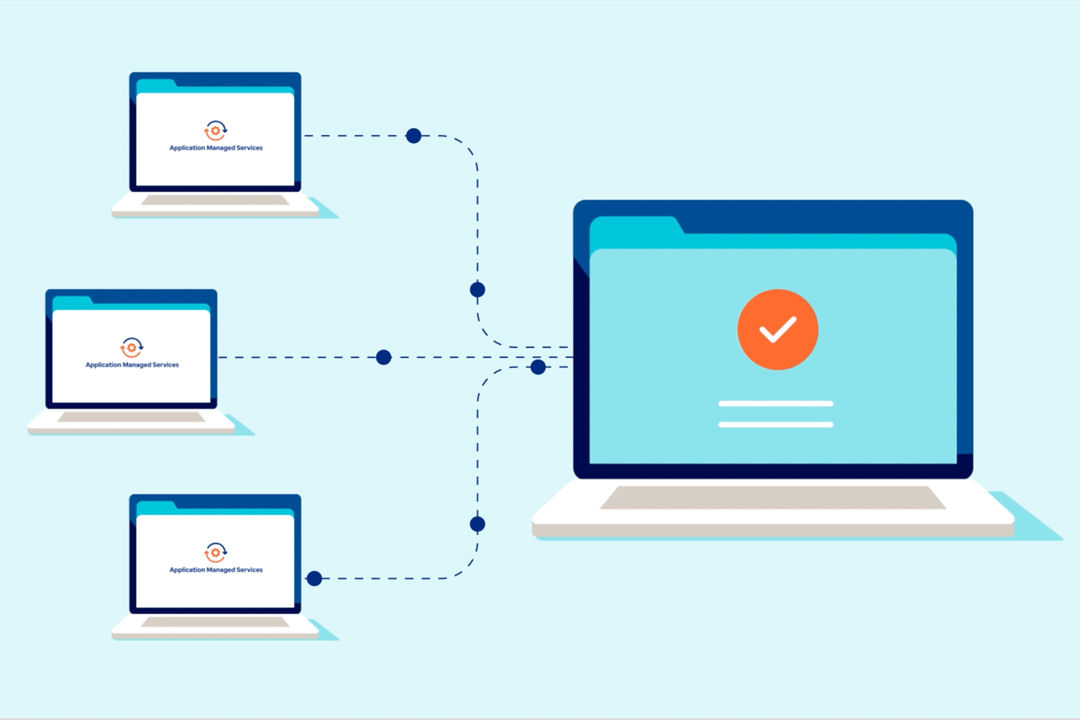
Our Application Managed Services team is here to support you in achieving seamless implementation and smooth day-to-day operations.
Address emerging areas of spend
Our library of specialty content suites helps you address trending areas of spend, including emergency department and specialty medication.
Maximize the value of your Claims Edit System
Shift your edits further left and add specialty content and analytics to address trending areas of spend.
 Software
Emergency Department Claim Analyzer – Facility
Control rising emergency outpatient facility costs with automated, consistent and defensible E/M coding evaluation.
Software
E&M Professional Analyzer
Control rising emergency professional costs with streamlined, reliable, and defensible E/M coding evaluation.
 Service
Application Managed Services
Our dedicated AMS team can provide ongoing support to help you operate, maintain and maximize the value of your software.
Frequently asked questions about claim editing
The most efficient approach for health plans to edit claims is to rely on an automated, rules-driven review system that evaluates claims before payment is issued. These payment integrity solutions are designed to handle the vast complexity of modern healthcare billing by scanning for missing information, coding inconsistencies, questionable relationships between procedures and diagnoses, and potential compliance issues across professional and facility claims.
By comparing each claim against extensive libraries of industry, regulatory and contract-based rules, automated tools help detect errors early — ideally before a payment is made. This not only accelerates processing speed but also reduces rework, lowers administrative costs and creates a more seamless experience for both health plans and providers.
Learn more about payment integrity technology solutions that are helping health plans automate and scale the claim editing process.
Health plans can improve claims payment accuracy by implementing a rules engine that integrates regulatory guidance, payer-specific reimbursement policies and flexible logic that can adapt to emerging billing trends. Instead of relying solely on manual review teams, plans can leverage automation to apply consistent, evidence-based criteria to every claim.
Claims are evaluated using the most current clinical guidelines and regulatory updates, reducing variability that often arises in manual processes. The ability to fine-tune rules — such as editing thresholds, clinical validation criteria and contract-specific payment terms — gives health plans greater control and precision.
As a result, claims are more likely to be priced and adjudicated correctly the first time, improving financial accuracy and reducing provider abrasion caused by unnecessary denials or retroactive corrections.
Read our report on denial trends.
Claims editing platforms have evolved to provide a high level of transparency into the logic behind each claim adjustment. This includes detailed explanations, clear sourcing and references to the specific rules applied.
When providers receive claim outcomes supported by transparent rationale — rather than opaque edits — they are better able to understand what triggered the adjustment and how to avoid similar issues in the future. This transparency helps reduce back‑and-forth communication, minimize appeals and foster greater trust between health plans and providers. It also enables internal teams to trace decisions more easily, improving audit readiness and helping reinforce a consistent, defensible claims process.
Managed-services teams play a critical role in helping health plans maximize the value of their claim-editing technology. These specialists handle ongoing maintenance such as implementing regulatory updates, calibrating editing rules, troubleshooting system behavior and optimizing workflows to reflect changes in the market or within the plan’s internal operations. They can also evaluate performance trends — such as recurring provider issues or categories of edits that produce the most savings — and recommend adjustments to strengthen effectiveness.
Acting as an extension of a health plan’s internal team, these experienced professionals provide operational oversight, technical expertise and strategic guidance that help the editing environment remain current, efficient and aligned with organizational goals. This level of partnership helps plans achieve sustained claims payment accuracy and accelerate the adoption of new capabilities without overburdening internal staff.
Yes. Many editing platforms support both national Medicaid guidelines and highly detailed, state-specific rules that vary across jurisdictions. These rules include specialized policy requirements, state-mandated billing rules and coverage nuances that must be applied accurately to maintain compliance and avoid improper payments.
To support this complexity, vendors often offer optional rule modules designed specifically for each state’s Medicaid program, with updates delivered on a regular schedule to accommodate legislative changes and policy additions. This flexibility allows health plans to tailor their editing environment to the states they serve, enabling more precise adjudication for Medicaid populations.
Healthcare payment integrity trends

E-book
This guide can help you optimize your payment integrity program and achieve savings goals within 12 months.

Article
Uncover the 4 major ways providers are leveraging AI and how this trend is changing payment integrity for health plans.
Article
Explore how real-time connections can enable more accurate claim submission to create a more efficient healthcare payment system.

Optum is all in on the future of payment integrity
By unifying solutions across the claim lifecycle, we help you:
- Catch issues earlier
- Act with greater precision
- Stay ahead of what's next
We offer a full suite of services and software that work together and on their own.
*PMPY will vary based on factors such as detection concepts included and provider exclusions. Results may vary across health plans and are not guaranteed.