Video
Technology as the catalyst for sustainable value-based care
Real-time insights and unified data are helping organizations reduce unnecessary utilization, close care gaps and improve patient outcomes.
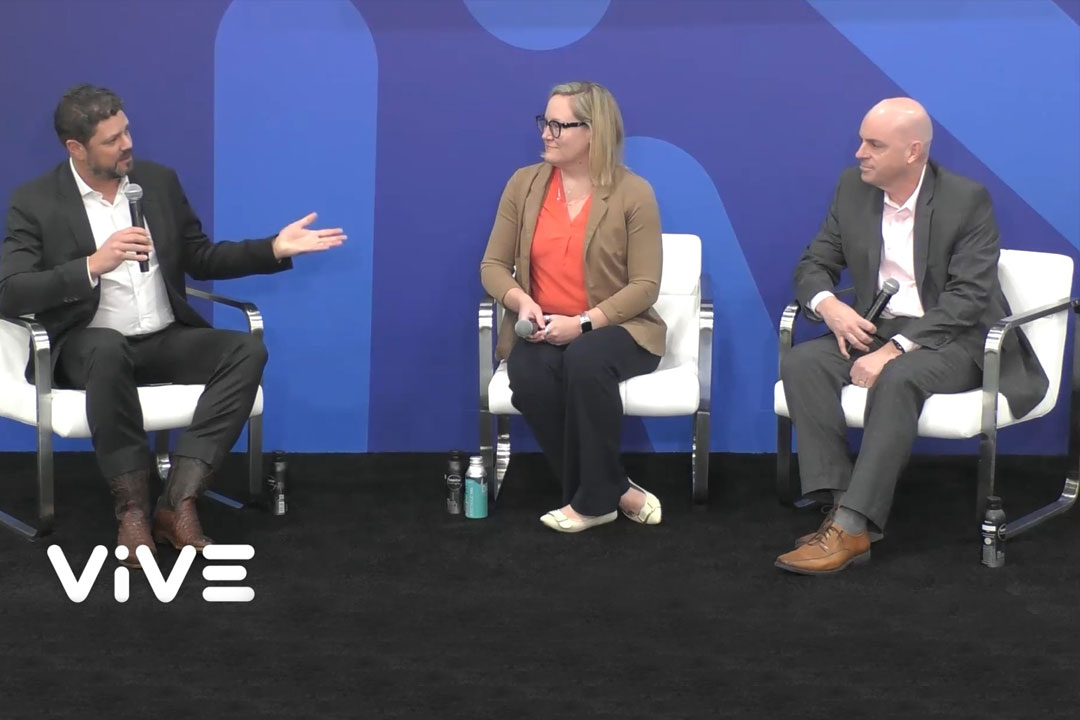
All right, uh, we're gonna kick off here. Um, my name is Jeremiah Reuter. Um. I'm an actuary and vice president at Optum. I'm probably the only actuary in this entire exhibit hall, so, uh, I'll give you a minute to, if you want to leave and not listen to the actuary, you're not gonna listen to me anyways. I'm gonna, I'm, I'm the moderator here and, and, uh.
Uh, you know, pleasure to be joined on stage, um, by Megan Miller, Ernie Scheffler. Um, uh, Megan, can you kick off introductions? Yes. Happy to. Thank you all for joining us for this conversation today and for our official kickoff of our Value Connect platform. Um, I am Megan [00:01:00] Miller. I'm part of the Optum Insight product team.
Um, I serve as the VP of Market Solutions, and so spend time in both with our, uh, health plan and health system partners, uh, talking about their needs and, uh, bringing forward products that, uh, it help to support the market. Good morning. Uh, Ernie Swer. I'm our Chief contracted managed care officer for C Medicine of USC.
Oh. I think it's on. Is that better? Uh, any event, I also oversee our value-based service organizations where we do a lot of our population health management bundle payments and direct to employer opportunities on the provider side. Great. Thanks Ernie. Thanks, Megan. So we're here, um, to talk about value-based care and data and insights and, and not gonna get stuck on data and insights.
We will talk a little bit about that. Um, but we really want to talk about how those data and insights lead to actionable outcomes. Through population health management, uh, improvement [00:02:00] in quality patient experiences, and how we, you know, we've partnered with Kec Medicine Boy going on seven, eight years. Um, a couple generations of population health analytics we, Optum just announced, um, or just launched Value Connect, um, which is our value based care analytics platform.
AI enabled population health, enabler, um, everything value-based care. When I say value-based care, we have a lot of definitions of value-based care, right? I'm thinking about the affordability of care, the quality of care, the outcomes, and the patient's experience. And we really want to dig in on how we generate that insight.
But then what do we do with that insight? How does, uh, uh, academic medical center, like tech medicine, um, use that insight to, to impact their patients? So I wanna kick off, uh, Megan, to, to, for you to tell us a little bit about Optum's top priorities for imp impactable sustainable comprehensive analytics strategy.
Yeah, happy to. So it, we have been in this [00:03:00] analytics business for couple decades now. Um, we've built a methodologies and foundations that, um, have been market leading. As we took a, took a look at that strategy, we realized that we really needed to start investing and really focusing on the next generation.
And I, I know my product lead is out in the, in the, the room here, and he is like anti term analytics because what is important are the insights and the actions. That we can power. And so as we have gone forward and really thought about what we need to bring to the market, we have this focus on AI interoperability and really helping to prioritize and.
Um, triage and get to the most impactful actions and guide those actions integrating into the workflow so that as we think about our partners and the teams that they have and the, the patients and members that they are serving, they can best leverage the resources that they have to really bring [00:04:00] forward, um, it the most impactful action.
Great. Thanks Megan. Yeah, and, and, and, and it is really about the insights. And I, and I, and I say this a lot, um, we can talk about data maybe being a commodity, um, but when you start to enhance that data and you start to generate insights, I say this all the time. There's there, there's good analytics and there's bad analytics, and it's really critical, um, that we're generating good and actionable insights.
Now, I wanna, I wanna focus on, so we do a lot in the provider space. Um. Uh, we really rely on our electronic health records and EHRs, so want to understand how, uh, we are working to ensure an EHR first strategy, how we are integrating these insights into, uh, you know, workflows, clinical workflows. Yeah. So it just getting to the insights and getting that segmentation into the right actions.
Doesn't get the, the action completed. And so it's really important to make sure that we are also getting [00:05:00] into the EMR as we think about the provider actions. Um, we don't want providers to have to go to a different portal. We know that they don't have time to do that. That is not, um, it. A sustainable workflow for them.
And so making sure that all of our data and insights are connecting in a bi-directional way into the workflows, wherever those workflows sit, whether it's the EHR, whether it's a care management program, maybe that care management program is operated out of the EHR, um, really focused on making sure that that's a streamlined experience.
Great. Thanks Megan. And so we're, we're gonna stay on the insights, uh, theme here. And, and I love, we're on the insights stage. I don't know if that was a coincidence or I, I don't know what happens on the chime stage. But, um, here, here we're gonna get into the insights. Um, Ernie, Ernie, uh, so once your team has been delivered, the data, the, the enhanced analytics, um, you know, the population health data.
What insights, uh, became most actionable for your care teams and, and, [00:06:00] uh, why did those insights matter? Yeah, so when we received the, we had Optum do what's called a health opportunity assessment Analysis on our population, and when we received the data back, it really opened our eyes. And what we were able to identify right away is you had certain patient populations that you wanted to, to focus on, and so it.
Kind of informed us of the patients we need to reach out to, and then how to manage them. And more importantly, how do you allocate your resources? As we all know, we're doing more with less, right? And so how can we be efficient? And so when we started looking at the data, we identified, for example, we saw, you know, patients that had multiple ER visits, which we, we call frequent flyers.
We saw patients that had gaps in quality metrics. We saw patients that had gaps in. Care coordination. Uh, the other thing that was really eye-opening is when we started looking at all this [00:07:00] data, it wasn't just individual, it was systemic. And that really helped us a lot, right? Because we were able to look at this from a 50,000 foot feet and we could see, okay, here are the patients that have, you know, lower back pain issues.
Here are the patients that have chronic care issues. Here are the patients that have cancer issues. Here are the hypertensions. And so it really informed us. To be able to target a dedicated, uh, population. And so then what we did from that is we also received these dashboards and these were very actionable dashboards.
'cause a lot of times you get data and there's a lot there, right? There's analysis paralysis. You're not really sure what to do with it. Right? And it's overwhelming. And the reality is, our physicians, whether it's our physicians clinical care teams. They have to be efficient, right? We have to make sure that we provide them action data and so we are a ABS are actually able to get these scorecards.
And what was cool about that, it's very customizable as well. So we can sit there, we can go through the [00:08:00] data, we can identify what we want to utilize and then once we have that, we'll meet with a care team. And so when they're gonna have a, next time a patient has a visit, they already know all the gaps in cares.
In addition, we have a whole comprehensive clinical care team, whether it's care managers, care coordinators, we work with the pharmacy offices, PTOT. It's a whole team working together that's focusing on this population subset. So it's really helpful to have that data, have the dashboards, have the report cards that we're able to then communicate that to the clinical care teams.
Just to chime in it, Ernie, you bring up a really great point. As I think about the kind of interoperability and the end to end those dashboards and the scorecards at the end, really making sure that we're monitoring the ROI. So it's not just getting the insights into the workflow, but it's getting the information back from the workflow so that you can measure the value that you are it, that you will have brought forward and that the programs are bringing, which also it [00:09:00] informs and help.
As you think about what is the next program or where do I need to make adjustments, so great point. Great. Thanks. Uh, another question for Ernie. Um, you know, extending this now to, you know, some of the outcomes, the most meaningful quality or population health outcomes that the value-based services, um, organization has achieved.
And, and, you know, talk a little bit about how this gets into, you know, the operating model, um, not just of the the VBSO, but into the. Into the care teams, into the workflows, um, that, that, uh, ultimately achieve these results? Yeah, so, uh, again, for us, data is critical, right? If you have data, you can make informed decisions.
And what I would say is when we went through this, and this was probably in 2018, and we identified with our population, we were, you know, we were really able to, to look at the data and identify. You know, like programs we wanted to put in place, comprehensive disease management programs. [00:10:00] So whether again, that's for the diabetic patients, whether it's for our hypertension patients, whether it's for a smoke and cessation program, all these different programs that we were able to put in place, uh, the coordination and really collaboration partnership across the health system with our IT folks with Optum Analytics was critical.
And because again, it wasn't that a one size fits all right? You have to be able to be customizable, whether it's the different Tableau reports, all the different information that we received. But I would say, and then of course being able to measure, are we bending the cost trend, right? I mean, at the end of the day, that's really one of the, the impactful points we wanna look at.
And, um, so, but if, if I had to give you one Jeremiah, as far as most impactful, I would say our quality scores really, really proud of that. And when we started this back in 2018 and we got the, the analysis from from Optum, we saw our population. [00:11:00] We wanted to select metrics that were applicable to our population data sets.
And so it was kind of your standard HEDIS metrics, right? We had a lot of cancer screenings in there. We had diabetes screening, we had depression screenings, we had readmissions, we had health risk assessment. So we landed on nine. We didn't want to have it. Too overwhelming. And when we looked at it and then we looked at Optum had the disease registries, which were very helpful.
We had the benchmark in. At that point in time when we started the program, we met one of the nine national PPO benchmarks. Right. And not surprising 'cause we weren't really managing it, we weren't focusing on it. And within 18 months, working through the datas, working through the scorecards and the dashboards.
We're able to increase that to seven of nine, and within two years we met all nine, which was really, really impactful. And what we do is we don't rest on our success. So every [00:12:00] year we work with Optum, they run it through their system, and then we identify for that population. Are there new metrics we want to, you know, bring in?
Are there some metrics maybe we need to sunset because we have a good handle of it? I think as of today. We're about 11 quality metrics that we focus on for the population. And again, what really helps it is the workflow. It's having those reports, having that ability to work with the care teams. And I wanna be clear, it's not one initiative or one individual that really, you know, yields these results.
It's everybody working together with the data, working on the clinical care team. Like I said, we have care managers, care coordinators. You have the primary care physicians, you have all these other departments, PT, pharmacy that's focused on the population. And so really working together is where it's very impactful.
And you know, one of the other things we do is when we have a, one of our patients are the, at the hospital, we [00:13:00] follow up with 'em the next day, post discharge, and we'll reach out to them and we'll, I ask them, you know, did you get your medication? Did you make your follow up appointments? Anybody who's ever been at a church academic medical center, access can be challenging, right?
So something as simple as can I help you make your appointments? Sounds like it's easy, but it's so impactful. And a lot of the feedback we get back from the patients, they feel known, they feel supported, and it really makes a difference. And so again, just having that kind of comprehensive, interdisciplinary team working together, having the right data so you know where to target is very impactful.
And just to, to pile on there a little bit, a couple great points that you brought up. It, your results have been remarkable and the workflows and the partnership and everything that, that you all have done has helped us as we figure out what can we bring to you next and having that integrate integration of the data so that we can easily adjust for you, help you on the data.[00:14:00]
Um, and what the next opportunity is going to be without having to do a new op, uh, new implementation. Right. Having any of that lift on the front end. Um, it hopefully will continue us into the future on, on growing, uh, additional opportunities. But, um, it, having that foundation and the, the single implementation has been really important as we've thought about our, our product strategy and hopefully continues to help.
Good. Thanks Megan. Um. So I got one more question for you, Ernie. Um, but, but just wanna, you know, make, make a statement about, uh, K medicine. I mean, we, we are extremely proud, um, at Optum to be a partner of K Medicine. And, and here's why. When I think about value-based care, um, there's a lot of, a lot of things that go into value-based care.
I mean, it starts with contracts and contracting. And it gets into the underwriting. Um, and, and is this financially sustainable contract? And can we be successful in this contract? And you get into oftentimes coding and clinical documentation and [00:15:00] risk adjustment. Um, but what I find really unique about K Medicine is their dedication to quality and to population health and improvement of outcomes for their patients.
Um, and I, and I find that I, I say this to you, um, I find it really unique. The focus on. J just the, the hard focus on, on quality and outcomes for your patients. Um, and, and, and you, you do it really well. Um, so, so just one more question, Ernie. Uh, you know about, uh, your improving performance aqua across the quality measures.
Um, what do you see as, as key drivers and behind those gains and, uh, you know, kind of from a clinical standpoint, uh, from your operating, how your operating model is, is structured? Uh, maybe just sharing a little bit, you know, a little bit more, uh, insight into. Into, you know, how, how you are so hyper-focused and how you are driving those quality improvements.
Uh, you know, I touched on it just a little, is we don't rest on our past successes, right? And so we're always looking to our, our culture is a continuous [00:16:00] improvement culture, and how can we improve this? And one of the things that we did early on is really to engage our clinicians and our care teams, right?
In addition to our patients. We think we know the programs that the patients want. But at the end of the day, we really don't know that if we don't ask them. And so we spend a lot of time on patient surveys, satisfactions. We also have a patient focus group where we ask them, what are some of the services, what are some of the programs you'd like to see?
But I think getting back to the, to the workflows and the, and the programs, it's the basic fundamentals, right? What are the clinical interventions that we're able to implement? And again, you need that data. You need the insights, you need the information. To be able to make those decisions, because sometimes when we first receive the data, if you look at a particular patient and they have some missed gaps in cares, you may think as a clinician or a care team, that's a isolated incident.
But then when you look at the aggregation of the data, it's, well, wait a second. This is a systemic issue. And [00:17:00] so it's really important to have those workflows and have, again, the ability to look at the data and massage the data. I mean, Optum has been a phenomenal partner. Obviously they have their. Set kind of dashboards, KPIs, but anytime we, you know, talk to them and we have, you know, questions, concerns, they're part of the team, right?
They understand our data sets. And so I think that's really, really important. And, you know, I, I guess what I would leave everyone is when you have all this data, at the end of the, at the end of the day, the clinical team knows what to do. We have a operated model that makes it easy to do. And then finally, most importantly, the leadership team makes it non-optional.
This is what we're gonna do for our patients. Good. Thanks, Ernie. Megan, any uh, any closing thoughts? It just, it, I wanna reiterate, we really appreciate the partnership with Keck Medicine and the, that bidirectional feedback loop that you mentioned where there's questions or concerns, it helps us get better, [00:18:00] um, especially as we think about it again, that end member patient.
Um. Uh, care and quality of care, as well as the, the experience for the providers and making sure that things are as easy as possible. Again, with that focus on that end to end, being able to look retrospectively at historic performance, looking prospectively at opportunities so that you can really focus and make sure that you're able to use your resources in the most, uh, appropriate.
Um, it hot top of license way and then getting that feedback loop and making it really, um, seamless and easy, whether it's your, your partner teams, whether it's your care management team, whether it's your providers. So, um, I think you guys have, have really embodied what we are, what we are going after, and really look forward to the future.
Future. Yeah. I, I was gonna echo that, Megan. I mean, we really look forward, uh, to this next generation of our value-based care analytics. Population health analytics. Um, we really, uh, [00:19:00] you know, we're launching into ai, so we are getting insights, um, quicker. Um, you know, enabling resources to get faster to value, faster to outcome.
We look forward to, uh, you know, creating next generations beyond that, but really excited to, to launch this and launch this with Keck. Yeah, the, the ability that AI has really brought us as we think about the chatbots, whether it's, uh, mining the data and helping us to bring forward the systemic opportunities, um, whether it's the.
Agents that we have that are training the data make, allowing us to move beyond some of the more static benchmarks and the ability to really start to bring in more of that actuarial expertise and start to automate what can be automated while making sure that, um, again, it's, it's about efficiency and how can we use AI to best inform and create the efficiency as we move forward.
So, completely agree. Great. Thanks Megan. Uh, th thanks everyone for sharing their time today and enjoy the rest of, uh, your time at bi. [00:20:00] Thank you all.
Related healthcare insights


On-demand webinar
Explore the 5 pillars of value-based care every health system, health plan and provider needs to succeed.

Report
Optum has been named the market leader in the Frost Radar™: Healthcare Payer-Provider Collaboration Solutions in North America report by Frost & Sullivan.


White paper
Learn 7 ways artificial intelligence is changing the game in healthcare.