
On-demand webinar
Innovating care for vulnerable populations
Join speakers Saad Ahmad and Jared Landis to see how in-home technology helps payers give better care, solve social problems and improve health for people who need it most.
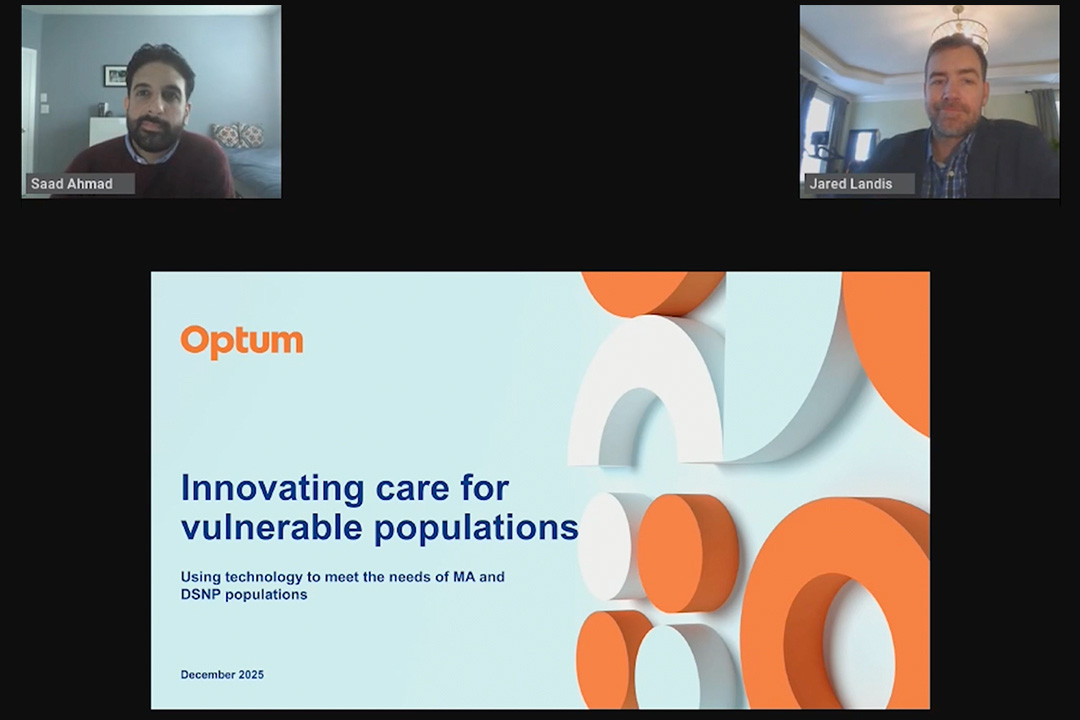
Innovating Care for Vulnerable Populations
0:00
Hello and welcome to today's webinar, Innovating Care for Vulnerable Populations.
0:05
Before we get started, I'd like to review a few housekeeping details.
0:09
Today's webinar is being recorded in an online archive of today's event will be available within one to two business days.
0:17
If you have trouble seeing the slides at any time during the presentation, please press F5 to reflect your screen on APC or Command R If you're using a Mac, you may ask a question at any time during the presentation by typing your question into the Q and A box located on the right side of your screen and pressing Enter.
0:35
And finally, I'd like to remind you of a HIPS antitrust statement located in the link just below the slide viewer.
0:41
We will, as always, comply with that statement.
0:44
Among other things, the antitrust statement prohibits from discussing competitively sensitive information.
0:51
We're very fortunate to have with us today Zad Ahmad, he's a senior director in strategy and innovation at Optum Home and Community, a division of Optum Health, and Jared Landis, Vice President of research for Advisory Board.
1:04
At this time, I'd like to turn the floor over to our speakers.
1:10
Thank you so much, John, and welcome everyone and thank you for joining us today.
1:15
So as Joanne mentioned, our session is focused on innovating care for vulnerable populations with a specific emphasis on how technology can help meet the needs of MA and decent members.
1:29
By way of brief introduction, Saad Ahmed, a Senior Director here in Optum Home and Community Care and Delivery, which is a division of Optum Health.
1:41
And as our name implies, our big bet is how do we provide care in the home to help take care of members for whom we have both longitudinal risk as well as episodic risk.
1:54
And this includes D SNP members, C SNP members, So chronic condition, SNPs, ISNIP and IE SNP institutional special needs plans, as well as IE SNP.
2:04
And of course, you know, technology is a big part of how we deliver that care.
2:10
And Jared, I'll hand it off to you.
2:13
Thanks.
2:14
Good morning, everyone.
2:15
Jared Landis here, Vice president over health plan research within Advisory Board.
2:20
If you aren't familiar with Advisory Board, strategic insights, market intelligence research firm, I've been around for 40 plus years at this point, have been part of the broader Optum umbrella for about 7 or 8 years at this point.
2:35
And so our team has been working with Saad and the home and community team on the research and the findings that we'll share with you today.
2:43
Also just personal.
2:44
Thank you everyone for taking the time out to join us.
2:48
I'll go ahead and dive in and get us started.
2:51
I want to 1st quickly Orient you to how we're going to spend the next 50 minutes or so.
2:57
Hopefully we'll have a little bit of time at the end for questions, so feel free to put those in the chat or in the question boxes.
3:04
We go along and you know, we'll circle back, we'll have some time at the end or jot them down and you can submit them when we get to the end.
3:12
But our agenda for today, our road map, if you will, I'm going to start with a brief overview of the MA and D SNP populations just to ensure that we're all working off the same baseline set of knowledge in terms of these markets, these populations, the the basics, what they look like.
3:30
From there, we'll dig in on the why of today's discussion, why effective technology adoption matters in this space, and the key problems that it can help solve.
3:41
Then we'll hone in on key insights from our health plan executive survey around how organizations are using technology in the home.
3:50
And next, we'll share recommendations, guidance on how to navigate some of the barriers to effective technology adoption.
3:58
Finally, I wrap up with some closing remarks in that time for Q&A.
4:03
As I mentioned, before we get too far in, I want to take just a moment to outline some of our key learning objectives for today's session.
4:12
Essentially, this is what I hope you'll take away from our hour together.
4:16
Most important is that we hope you take away a comprehensive understanding of how health plans are leveraging technology to meet the unique needs of Medicare Advantage and dual eligible special needs planned population, particularly as it relates to complex medical and social challenges within those populations.
4:35
Underneath that broad banner, by the end of this webinar, you should be able to articulate how technology can improve care coordination, streamline care transitions, empower providers and caregivers to manage chronic conditions more effectively at scale.
4:51
That's key.
4:51
We'll talk about that as we go along today.
4:54
Also, you should walk away today with an insight, with an insight perspective on how to overcome those key operational barriers here.
5:04
As we'll talk about this, just because there is promise in this space doesn't mean that we are guaranteed to realize that promise.
5:11
And so we have to overcome those operational barriers, digital inequities, care fragmentation, provider readiness.
5:17
And as we move through these topics, I encourage you to think about how these insights apply to your own organization.
5:24
Our plan is for you to leave here today with practical ideas, actionable strategies that you can bring back to your teams.
5:31
Again, keep them in mind.
5:33
We'll have opportunities to chat for questions at the end, so submit those as we go along.
5:41
As I mentioned earlier, first want to ensure we're all working kind of from the same foundational knowledge base or so in our first section, we'll take a step back for a moment and look at the broader landscape, understand why technology and innovation are so essential.
5:55
First, need to recognize the unique and complex challenges faced by Medicare Advantage and dual eligible special needs planned populations, the key social and clinical barriers these members encounter every day, and how those challenges then shape the need for new approaches to care delivery.
6:15
First up, take a moment to summarize what makes D Snips unique within the Medicare Advantage landscape.
6:22
By virtue of your attendance here today, I assume I'm largely preaching to the choir, so to speak, so I won't spend a ton of time.
6:29
But for any individuals less steeped in this space, D Snips or dual Eligible Special Needs plans are a type of Medicare Advantage plan that serves individuals eligible for both Medicare and Medicaid.
6:41
For your awareness, there are different types of D Snips fun acronyms that go along with those Heidi's fighties.
6:48
We won't go into all those details here today, but you know at the same time wanted everyone to know that this is a growing population within the Medicare Advantage space.
6:59
Now over 6 million people enrolled in D Snips and that population continues to grow year after year.
7:05
What I want to focus on here, the rest of the slide, what you see are some of the key characteristics of these dually eligible individuals.
7:14
They often face heightened health and social challenges as well as logistical challenges since they have to navigate both Medicare and Medicaid systems.
7:24
Many experienced significant barriers to accessing care, transportation difficulties, social isolation, limited health literacy.
7:32
This population is more likely to struggle with chronic conditions, mental health conditions and disabilities impacting their ability to live independently to manage their own health.
7:42
Then, given the myriad of healthcare needs that we're talking about here, they frequently encounter fragmented care leading to gaps in treatment, lack of support for their complex needs.
7:53
Ultimately, it's going to intersection of economic hardship, chronic illness, limited support systems that increases their vulnerability within the healthcare system.
8:03
And so put it all together, why does this matter?
8:06
Addressing needs of dual eligible individuals is critical not only to right support our members, our patients, to improve their health, quality of life, but also from a big picture macro perspective to ensure that our healthcare system delivers equitable, efficient, coordinated care for the individuals who need it most.
8:27
Then begs the question, how do we address the unique needs of this population?
8:32
No easy answers here, just to be realistic about it, but there are avenues and there are solutions that can be pursued.
8:42
They are comprehensive, they are big, they are, you know, tough in nature.
8:46
But I think it breaks down into the two main buckets here ultimately.
8:50
First you need to look to elevate the baseline level of health and well-being for this population.
8:56
Said differently, the decent population requires a variety of social determinants of health needs.
9:01
Social factors like housing, transportation, food security, access to community resources can significantly impact their underlying ability to manage chronic conditions, adhere to treatment plans, and maintain overall well-being.
9:17
Second, those multifaceted healthcare needs must be met effectively and in a high quality fashion.
9:24
Again, if I were to say that differently, what we're talking about here, this population will need to utilize healthcare services, multiple healthcare services.
9:33
Accordingly, clinical and care coordination needs must go beyond traditional medical care.
9:39
This can include things like behavioral health services, care coordination, preventative care steps, home based care interventions, which we'll talk about a lot here today.
9:49
By effectively addressing these two buckets, you can elevate the health and well-being on an ongoing basis while improving the effectiveness of the interactions with the healthcare system.
10:01
Ultimately, we're talking about kind of, you know, the tried and true, right care at the right time.
10:07
And that then in turn prevents avoidable hospital utilization, supports better outcomes, all those things.
10:14
Again, we want to be impractical here today.
10:16
We want this session to be practically beneficial for you.
10:19
So I'd encourage you to take a moment, consider the question, which social determinant of health is most challenging to address in your population and why.
10:29
And if you feel so inclined, you can put that answer in the chat.
10:35
I mentioned Home Based Care briefly on the previous slide.
10:37
This is something that's been steadily gaining momentum in the Medicare Advantage market broadly and with D SNPs specifically.
10:44
This growth is because of the potential Home based Care holds to help plans respond to both financial pressures and member expectations.
10:53
When we break down the main reasons why Care is moving to the home, 1st and fundamental, most fundamental, the home is a lower priced site of care, lowest priced site of care, right.
11:04
Providing care in the home when clinically appropriate is less expensive than facility based settings like hospitals or skilled nursing facilities.
11:12
As health plans struggle with managing clinical costs, they are increasingly turning to the home as a cost effective alternative, helping control spending while simultaneously delivering high quality care from chronic condition management to post acute recovery.
11:27
Home based care can prevent unnecessary hospitalizations, reduce readmissions, leading to significant savings for health plans.
11:34
And I think one of the dynamics about home based care is really that interesting element, the reality that they, you know, home based place care can support on that prevention and Wellness on the upfront my even on the primary care side, as well as on the back end that post discharge recovery therapy ongoing management needs.
11:54
So that's, you know, kind of a unique value proposition about the home setting that really you don't get with any other facility based setting.
12:03
Second, consumer preferences.
12:05
Here, consumer preferences are clear.
12:08
Individuals want care that is convenient, comfortable, personalized.
12:12
They want home based care.
12:14
Home based care offers flexibility, privacy, the ability to stay in a familiar environment.
12:19
There is, you know, survey after survey that makes this abundantly clear.
12:23
It's especially important for older adults, those with limited mobility.
12:28
Our survey and interviews confirm that plans are responding to this demand, investing in solutions to meet members where they are.
12:38
3rd next.
12:39
Emphasis on whole person care models.
12:42
Home based care makes it easier not just to address clinical needs but also those social and behavioral health challenges.
12:49
Providers and caregivers can better assess and intervene in areas like nutrition, housing, social isolation when they're connected to members in their daily lives, when they have, you know, that view inside at the member at the patient's home.
13:03
This approach supports healthier outcomes aligns with the industry's ongoing shift towards whole person care.
13:09
4th need for scalable solutions.
13:12
I'll double click on this in a moment.
13:14
And then finally, most practically, the rise in number of homebound adults, but the aging population, increasing prevalence of chronic condition means more individuals are unable to easily access traditional facility based care settings, even their primary care offices.
13:31
Home based care addresses this gap by bringing services directly to those who are homebound, reducing barriers to care, improving equity.
13:39
This trend is particularly relevant for Medicare Advantage and DECENT plans where a significant portion of members face mobility and or transportation challenges.
13:48
And So what we're talking about here shift towards home based care, offering the opportunity to better control costs while improving experience and delivering comprehensive, high quality, coordinated care that ultimately reflects people's preferences and needs.
14:05
When we talked to health plan leaders about home based care delivery, the first question is almost always about scale.
14:12
How can we scale these models?
14:14
Because let's be pragmatic.
14:16
The reality is outside of a residential living environment, you've got a single patient, single member and a home.
14:23
You've got the windshield time as caregivers travel between patients.
14:27
How many patients can we truly manage in the home is a question I get from health plans all the time.
14:33
And that's where technology comes into play.
14:34
Technology becomes pivotal and making these new models of care possible at scale across the industry, leaders are turning to technology to tackle some of our biggest challenges in a couple of different ways.
14:47
With the correct tools, we can be more efficient with our time.
14:51
That's on the left hand side, enable better care coordination, improve communication across care teams to maximize the FTE allocation, Proactively manage chronic conditions to minimize escalations to deploy timely interventions.
15:06
On the operational side, technology offers additional advantages for scale, can streamline administrative tasks, freeing up time to focus on patient care, facilitate home based care delivery or in some case serve as a substitute for in person interactions, whether through virtual visits, remote monitoring, digital engagement tools.
15:27
Lastly, optimizing clinical workflows and support seamless care transitions by smartly leveraging data.
15:34
Leveraging data correctly, we can better intervene, we can better monitor and manage our patients clinical needs.
15:41
In short, technology isn't an add on here.
15:44
It's the enabler that will allow us to deliver more coordinated, efficient, personalized care in the home to those who need it most.
15:55
Let me move us forward here.
15:57
So that's the backdrop for the rest of our time today.
16:01
Hopefully everyone now feeling solid on the basics of the DSNP population, the role technology can play in meeting their needs, particularly in the home setting.
16:11
This is the need and the potential promise.
16:14
Next, I want to shift our lens to how are MA plans actually thinking about home technology?
16:20
What and how are health plans doing here?
16:23
What is the industry's experience to date?
16:26
To better understand how health plans are approaching in home and supporting technologies, we conducted a survey of 50 health plan leaders.
16:34
Respondents represent a mix of plan types including national, regional, state based organizations range of plans including individual MA plans, Medicaid, D SNPs, individual exchange plans.
16:45
This diverse group provided insights into both the adoption and the effectiveness of technology solutions across a range of member populations and plan offerings.
16:57
Again, let's start on the pragmatic side, the barriers.
17:00
I want to be realistic.
17:01
Just because the promise of technology enabled care in the home exists, doesn't care guarantee that it is or will be realized.
17:10
Realistically, health plans continue to face barriers when it comes to both adopting and investing in new digital solutions.
17:18
So let's take a closer look at some of the key challenges limiting technology adoption.
17:23
Funding limitations.
17:24
Budget constraints remain a major hurdle, making it difficult for plans to invest in new technologies or to scale digital initiatives across their member populations.
17:34
Regulatory compliance.
17:36
Complex and ever changing regulatory landscape not only adds administrative costs, but also slows the adoption of innovative solutions at the same time.
17:44
We'll talk in a few slides about how regulatory compliance is also a tailwind here driving adoption.
17:51
Digital literacy.
17:52
Low technology literacy among both members and staff can limit engagement, reduce the effectiveness of digital tools, especially in populations that may need those solutions most.
18:02
Lastly, reimbursement.
18:04
Unclear or insufficient reimbursement models often discourage plans from adopting new technology enabled care approaches as a financial return may be uncertain.
18:15
On the right hand side slide, we asked health plans what is limiting their investment in this space given the comments I just made about funding limitations, questions on ROI maps that cost ranks as the top investment challenge cited by health plans.
18:30
This highlights the need for creative solutions and strategic vendor partnerships that make technology adoption more feasible so that we can ultimately be more impactful for our members heading in here, I'll put the same question to everyone in today's audience that we asked in our survey, What's the biggest barrier to tech adoption in your organization?
18:53
Again, feel free to put that in the chat if you're so inclined.
18:58
Want to make sure I actually click the slide and don't leave you all again.
19:05
Given the investment barriers I just laid out, we're seeing a noticeable shift in strategy among Medicare Advantage plans.
19:11
Plans are priorities, prioritizing tools that help them better manage the care of their existing populations over consumer facing technologies with the goal of attracting new members.
19:22
On the left hand side, you see the strategic focus areas that are top of mind for plans today.
19:27
Better care coordination.
19:29
Ensure members receive that seamless, integrated care across settings.
19:33
Risk stratification to help identify hiding members allocate resources more effectively.
19:38
Proactive interventions that allow care teams to anticipate and address health issues before they become acute.
19:46
When asked what factors most influence technology investment decisions, majority of respondents pointed to patient and member outcomes as their top priority.
19:56
Clearly, demonstrating that improved care management delivering better health results for current members is a driver of technology decisions, much more than viewing technology as a shiny object to attract enrollees.
20:11
In that same vein, when evaluating technology investments, health plans often prioritize back end solutions over member facing tools.
20:20
I'll unpack a few reasons momentarily, but at the most basic, it gets back to that idea of scale, right?
20:25
How can adopting technologies improve our efficiency?
20:29
Limit costs and resource requirements for a home based care model.
20:34
Back end technologies like benefit verification system.
20:37
Documentation tools operate behind the stream scenes to streamline core administrative tasks, lessen the burden on staff.
20:45
For example, benefit verification systems automate eligibility checks, reducing manual errors and delays.
20:52
Documentation tools support accurate record keeping, which helps with compliance and coordination.
20:58
API integrations are another important component, connecting various internal systems to improve data and workflow efficiency.
21:05
Similarly, claims processing automation speeds up payments, reduces errors by automating the review process.
21:12
Plans favour these back end solutions because they present less perceived risk.
21:19
I said that differently.
21:20
Realizing the value from these investments doesn't rely on direct member engagement, which can be unpredictable.
21:27
Realizing the value here is much more something that plans feel they can control adoption typically smoother among internal staff.
21:35
There's an immediate measurable impact on workflow and cost.
21:39
And contrast those front end or member facing technologies such as mobile apps, portals, they can face inconsistent user engagement, other adoption related challenges.
21:49
So overall, back end technologies more likely to deliver reliable improvements to operations and deliver those cost savings, making them a preferred investment for many health plans.
22:03
What I hope you're starting to see here is the practical approach that health plans are taking to technology adoption in this space.
22:09
This isn't some sci-fi futuristic version of the world.
22:14
This is leveraging technology to solve real business challenges.
22:19
And that's also the case when you dig in on the factors compelling health plans to invest in technology.
22:26
Specifically here I'm talking about regulatory changes.
22:29
Regulatory changes actually play an outsized role in determining technology adoption.
22:33
Health plans view technology investments as a catalyst for responding to new and or evolving regulations.
22:41
First exclusive align enrollment.
22:43
We're moving to a world where states require D SNPs to enroll only full benefit, dually eligible individuals who receive both Medicare and Medicaid benefits from the same parent organization.
22:55
The idea is to streamline care by providing a single set of benefits, unified materials, integrated processes for enrollees and providers.
23:03
Accordingly, plans need robust technology systems.
23:08
Next, star ratings, my apologies here, I didn't get the slide updated, but if you did catch it, if you didn't catch it, last week, CMS dropped the 2027 Medicare Advantage and Part D proposed rule and that outlined a number of potential star rating changes.
23:25
I would also note we're a long way from those being finalized, right?
23:29
It's the proposed rule, so I won't get into tons of specifics, but it does call for the HealthEquity Index or the excellent Health Outcomes for all reward to be removed.
23:40
So that likely won't be a factor going forward.
23:43
But if you look at the proposed changes in general, in aggregate, the spirit of the changes appears to be about, you know, a growing emphasis on outcomes over procedure and then the long run that incentivizing technology adoption is going to improve quality metrics, clinical cost efficiency.
24:03
3rd, Rab B audits.
24:04
CMS has expanded its Rab B audit program, conducting retroactive audits for payment years from 2018 to 2024, increasing the number of audited MA plans.
24:15
Risk adjustment errors found in samples result in financial penalties as a percentage of total revenue, driving plans to adopt technology for improved documentation and compliance.
24:26
Lastly, V28 coding requirements.
24:29
New coding standards require more precise and comprehensive clinical data reporting.
24:34
Plans must upgrade their systems to capture code, submit accurate information to meet regulatory requirements, avoid penalties.
24:42
Put it all together, these regulatory forces are making technology adoption essential for health plans to ensure compliance, optimize performance and improve outcomes for their members.
24:56
Beyond regulatory pressures, the overall overarching market forces are also pushing leaders to consider technology solutions, particularly as it relates to clinical cost management.
25:09
While operational costs, as I noted earlier, is seen as the biggest barrier to investing in new solutions, plans must still make smart investment decisions that will allow them to manage clinical costs.
25:20
I'm sure everyone's seen all of the headlines about the clinical cost spikes the last 2-3 years.
25:26
There's health plans continuing to struggle to get MLRS under control, The vast majority of Blues plans operating in a negative operating margin last year, much of that driven by clinical costs.
25:38
Health plans face unprecedented financial pressures from rising medical expenses, increased drug costs, growing dual eligible population with complex needs, all driving up the total cost of care.
25:52
At the same time, competition in the decent market is intensified fine as more plans look to that market as a potential growth lane.
26:00
Given the hyper competitive nature of the individual Medicare Advantage market, if you will, health plans are looking to thread the needle here on growth strategies that enable sustainable margins.
26:12
And again, doing that requires an effective clinical cost management approach, advanced analytics, automation, digital care management tools and power plans to more effectively identify high risk members, reduce avoidable utilization line operations.
26:28
Again, for plans, it's about balancing the upfront investment requirements with taking steps necessary to control costs, improve outcomes, remain competitive.
26:38
So as we've seen in the market, plans that fail to strike the right balance fail to embrace this shift.
26:44
They risk being left behind in an increasingly demanding and competitive market.
26:49
And so now I'm going to turn things over to Saad to go deeper on our survey and research findings.
26:54
First, he'll focus on technology adoption and effectiveness trends and then close us out with a set of action steps for plans going forward.
27:04
Thank you, Jared.
27:05
So hopefully up until this point, you know, laid out some of the promises and but also being realistic about some of the challenges with technology.
27:15
But you know, to Jared's point also of being practical, wanted to highlight from our experience as well as the research on some of the solutions that you may find beneficial.
27:28
So I think many if not all of you would buy into the thesis that you know technology does hold the promise to augment if not complement care in the home.
27:39
But to clarify what we mean by technology, we thought it would be helpful to bucket it into two main categories.
27:47
First category of direct care technology which really focusing on the specific interaction between patients and providers and that's the focus on this slide and then in two slides from now supporting technologies.
28:01
So really those that are focused more on back end, more on enhancing care delivery or operational efficiency.
28:08
So definitely not an exhaustive list, but some examples of these direct care technologies, telehealth as I'm sure you're all familiar with, enabling virtual consultations, remote check insurance, ongoing communications with care teams, things of that nature.
28:25
Remote patient monitoring, using devices to track vital signs and other health indicators in real time and then providing that data to providers and other care coordinators and clinicians.
28:37
Wearable devices such as smartwatches and fitness trackers, helping patients and their care teams monitor activities.
28:43
Again, going back to that theme of data, smart home technologies like fall detection systems, motion sensors and voice assistants.
28:53
Obviously, when we're talking about patients in the home or in assisted living facilities, you know, these things start to play an increasing role.
29:00
And then Med management tools, including smart pill dispensers and automated reminders, honestly pretty low hanging fruit and sort of low fidelity interventions, but the data show proven to be pretty effective.
29:15
And then finally in home, diagnostic tools, empowering patients to conduct certain medical tests at homes, you know, not having to go to a laboratory to get any sort of screening done, but actually being able to do that in the home.
29:34
So highlighted some examples of direct care technologies, but of course, you know, what is important is how how widely these are being adopted and actually being used in the real world.
29:47
So looking back to our survey results, you can see that the most commonly used in home technology are medication management tools at 35 responses or about 30% of the total.
30:00
Not surprising honestly, you know, medication management is a universal challenge.
30:06
As mentioned, these are fairly easy.
30:10
I use that term relatively to implement and they deliver, you know clear value for both members and the plan.
30:16
In contrast, smart home devices are the least used.
30:21
Some feedback we got on that as higher costs, integration challenges and then uncertainty about ROI.
30:28
So having the technology available to members is 1 things.
30:33
But you know, for those that are do have them, you know, how how often are they actually using it?
30:39
So as you see in that right call out there, most respondents in our survey, 25 to 50% of their members said that they actively use in home technology.
30:49
So admittedly, engagement here is moderate, but you know, there's certainly opportunities to gauge more members with technology.
31:01
So as mentioned, supporting technologies are those that are focused more on the back end and really focused on enhancing care delivery or operational efficiency.
31:13
Again, not an exhaustive list, but you know, couldn't leave out EMR integration, which is fundamental think we're all buy into the fact that having a unified view of the patient, ensuring that all members who are taking care of that patient have access to certain clinical notes as data is important.
31:32
So EMR integration, you know, first and foremost can't talk about technology without talking about AI increasingly being used as a powerful predictive tool with ambient listening, member engagement tools, risk stratification, data analytics, which is that third one.
31:50
So included that and then data analytics specifically at talking about risk stratification and not just risk stratification on, you know, low risk members to high risk members, but using it in more meaningful ways with, you know, certain diagnosis or certain sort of attributes bringing in perhaps, you know, zip code data or other things to really sort of get a, a more nuanced view of the member population.
32:24
So bringing again some of our survey insights here.
32:27
The most commonly used supporting technology are not surprisingly data analytical, data analytics tools for patient risk stratification.
32:37
We know that, you know, risk stratification is important for population milk management and obviously a high priority for plants.
32:46
So not, you know, think that this trend will continue asking again about the effectiveness of these technologies, as noted in the call out, more than half of respondents rated the effectiveness somewhere on the range of very effective to effective.
33:03
So not bad, but obviously still rooms for improvement.
33:07
And you know, a question for the audience and please feel for you to use the chat.
33:12
Just looking at these server results, does do these adoption rates surprise you or would you think that's something that's on the lower end, would probably be on the higher end.
33:20
So feel free to use the chat and provide your responses.
33:30
So wrapping up this section, trying to bring this life to death with an actual case study of a member.
33:39
So this is a story about Margaret who is a 72 year old who is, excuse me, a 72 year old grandmother enrolled in a decent plan.
33:47
In the first year on the plan, Margaret was diagnosed with CHF, congestive heart failure.
33:53
She received in home nursing support to monitor symptoms and manage medications.
33:58
She also started using remote patient monitoring to help track her vital signs and provide real time alerts to her care team.
34:06
Obviously, nothing is foolproof and despite these efforts, Margaret did unfortunately have a hip fracture after a fall and needed to go to the hospital and then subsequently to a skilled nursing facility.
34:18
Again, technology played a key role here.
34:22
Her EMR followed her at cross care settings, care coordination platforms connected her to providers and then she was able to safely return to home.
34:33
In the second year, an annual telehealth Wellness visit was conducted and actually uncovered a diagnosis of diabetes.
34:42
She began treatment for diabetes advancing in Home Care Services and unfortunately she also had a diagnosis of cancer.
34:52
Remote nation monitoring was used not only to manage her diabetes, but also sort of the progression of her cancer.
35:01
Lastly, in a topic that I feel has sort of fizzled out, but Jared mentioned as well was, you know, access and addressing social determinants of health.
35:11
So Margaret also received personal care services twice a week, smart home assistance reminded her of appointments and medication time.
35:20
So again, just providing a an example over the course of three years of how technology was used to enable Margaret's care for a variety of complex conditions, which unfortunately is not unique among D step members.
35:40
So as you wrap up today, wanted to share some key recommendations to to really help you maximize the impact of your technology investments.
35:53
I'll go into depth on each of these in a little bit, but just as an overview, you know our recommendations as outlined here are aligning on technology investments, targeting high impact population, empowering caregivers and advancing back end capabilities.
36:14
And as mentioned, have a slide on each of these to sort of double click on them.
36:23
So first opportunity or recommendation is aligning technology with strategic and operational goals.
36:31
So often times what you find is you know, you have your corporate strategy team over here, you have your operational team over here, and then you have your your AI and technology team.
36:43
On another side, integration with strategic roles is, you know, really bridging that gap, making sure that there's that there's alignment.
36:52
And I would also say that, you know, technology, as we all know, should not be seen in of itself as the end goal, but you know, to Jared's earlier point, as an enabler to meet certain business outcomes.
37:06
A second tactic here is reinforcing SDOH initiatives using digital tools like analytics and remote patient monitoring to really support interventions.
37:17
This, as I mentioned before, I even remember, you know, two years ago this was actually a topic of AHIP, their annual webinar social terms of health.
37:28
And really making sure to consistently focus on that given, you know, the social terms of health challenges of our members and the data proof that addressing these needs do improve health outcomes.
37:50
All right, have trouble moving forward there.
37:55
Second recommendation is targeting technology to high impact populations and conditions.
38:02
So you know, completely acknowledge that not every member will benefit equally from in home technology.
38:10
So it's important to focus resources on where they'll have the greatest effect.
38:16
So for example, RPM has been shown to be particularly strong and maximize outcomes for chronic conditions, specifically cardiovascular conditions as well as diabetes.
38:28
So by prioritizing this group, really identifying that those use cases where technology can make an improvement, plants can maximize the value and the outcomes of their technology investments.
38:40
To put this into practice, highlighted 3 specific tactics again.
38:45
One, identify who those priority groups are within your population, focusing on the the conditions or the use cases where they're likely to have the biggest impact right not trying to boil the ocean.
38:58
Second is using prudent solutions.
39:02
Invest in technologies with strong evidence and effectiveness.
39:06
I highlighted, for example, that RPM has particularly been shown peer reviewed journal articles, case studies for cardiovascular conditions as well as diabetes.
39:16
So really, you know, leading with data and evidence as you're thinking through your technology investments.
39:23
And 3rd, expanding access and continuity.
39:27
So using technology to reduce in person visits and supporting care for underserved populations are hard to reach populations.
39:35
For example rural populations where you know providing in home care may not be operationally feasible or just economically not viable.
39:51
3rd recommendation is not to forget about the caregivers, which as many of us know are a key sort of caregiver as the name applies obviously, but a care coordinator, decision makers for decent populations.
40:10
Often they're overlooked by the care team.
40:12
So there is a unique opportunity to support caregivers both to improve the health outcomes of as a member, but also their health and well-being as well.
40:21
Right, You, there's some data and analytics or excuse me, articles out there about especially caregivers for examples for Alzheimer's and dementia patients, how their health decreases substantially by taking care of those members.
40:37
So really taking care of the caregiver and empowering them as well.
40:42
Tactically highlighted 2 tactics here supporting caregiver engagement.
40:48
So providing them with the tools that streamline communication, ensuring everyone is aligned on plans.
40:55
And the second is enhancing caregiver resources.
40:59
So you know, it could be as simple as caregiver specific guides or medication adherence tip.
41:05
And there's also of course some higher focus interventions as well.
41:19
The final insight we have is advancing back end capabilities for proactive predictive care.
41:27
So continued investment in back end solutions is essential and leveraging these tools for more proactive interventions using predictive analytics and enhanced data systems, plants can identify high risk members, anticipate needs and coordinate care.
41:44
So again looking at the two tactics here, for example, the enhancing back end systems, upgrading benefit verification documentation, workflow tools and then the second active of driving proactive efficient care.
41:58
So for example, using integrated platforms to improve operational efficiency or enabling earlier interventions for high risk members.
42:12
So to sum it up and going back to the objectives, really wanted to make sure that we're providing you with actual strategies, aligning on technologies with strategic goals, targeting high impact populations, empowering the caregivers, advancing back end capabilities, really all of these sort of goals and objectives to really look into how technology could be used to improve the care for vulnerable populations like D SNPs.
42:45
So encourage you all to hopefully this provides a helpful framework as you look at it in your organizations and driving meaningful change for the members that you serve.
42:58
And with that, Joanne, I can pass on to you for the Q&A.
43:03
Great, thank you so much.
43:06
And one moment while we just change our outlook here.
43:10
Thank you.
43:13
All right.
43:16
So this time we're going to address some questions that came in as that said.
43:20
And our first question is, what could be a successful business case for health plans to invest in, in, in home technology?
43:36
Yes, I think I can jump in there, right.
43:39
So hopefully, what I was emphasizing before is the practical nature of technology adoption.
43:47
And so really to me, that kind of breaks down into 3 buckets.
43:53
So the first bucket being right, improved clinical care and clinical outcomes.
44:00
And so that gets to a lot of what we're talking about as far as right timely interventions, things of that nature is improved care coordination, ability to, you know, track data and track, you know, patient record across settings.
44:15
So that's category one.
44:17
Category 2 was all those back end efficiencies, right?
44:21
That's where you can, you know, realize real tangible cost savings.
44:27
And so are we able to write redeploy Ftes more efficiently?
44:33
Are we able to, you know, do more with less, you know, less resource, less time, right.
44:42
And so those back end efficiencies, administrative tasks, things of that nature, right, you can really see, you know, tangible improvement there.
44:52
And then the third angle is on that regulatory side.
44:56
You know, I think just today, you know, one of the health plan newsletters I get right, big headline was right, 85% of health plan executives are, you know, financials are being challenged because of regulatory requirements, right?
45:11
And so that regulatory burden is real and it's non negotiable, right?
45:16
And so if you can make progress there, right, that is making progress on a must have tasks.
45:23
So think, you know, those are kind of the, you know, 3 pillars of investment, you know, justification that I was trying to convey earlier.
45:31
So that was, you know, me kind of summarizing what I already said, maybe in different words.
45:37
You didn't get a chime in on that section.
45:39
Anything else you might add or nuance you bring in?
45:44
No, I think you laid it out pretty well.
45:47
So great.
45:48
Thank you both and thank you so much for that question.
45:51
Let's take another question.
45:53
What are some opportunities to increase the number of members who engage with in home technology?
46:01
Yeah, I could take that one.
46:04
So as mentioned, one of the things that we sort of emphasized was the focus on the caregiver.
46:10
So really working with caregivers and family members to support adoption and just use of technology.
46:18
There's some simple things, you know, for example, ongoing support with technology challenges.
46:28
And so, you know, making sure that there's a dedicated line, for example, if someone is having trouble with sort of technology, ensuring, you know, proper onboarding and continued use of it, multilingual coaching, you know, to address potential language barriers.
46:43
So some little things, but I think 2 ones that I would emphasize is just making sure that, you know, you are, to the extent possible able to bring the caregiver in and not just to think about technology.
46:57
As you know, we've now deployed the device and everything we'll take care of, but really that ongoing mechanism to help support the member to continually use it and troubleshoot with any instances that they might have difficulty with.
47:11
I don't know, Jared, anything you would add less specific to this, but I think a lot of what we have had advisor board done research on related to member engagement and you know, member behavior change, right that on boarding.
47:27
Is, you know, outsized, you know, critical importance.
47:31
And so it's a lot of the, you know, I think, you know, saw you laid out a good amount of them, but it's a lot of right, the, you know, traditional member engagement, outreach, communication elements that can drive enhancement in addition to I think you're correct here in this case that caregiver role plays outside importance too.
47:53
But our, you know, research and surveys and data consistently find that, you know, driving member behavior change is easier in that onboarding.
48:04
That 306090 day window when they first joined the plane and plan.
48:09
And so, you know, devoting kind of outsized attention to that.
48:14
Is the other element.
48:15
I I, you know, kind of reemphasize or double down on here.
48:22
And our next question is what are the gaps you see with predictive AI and do you think AI tools can eventually support preventative rather than just reactive care?
48:35
Yeah, I can jump in there.
48:37
We've obviously Baiser board been doing a lot of research on the role of AI and healthcare across, you know, the last 6121820448 months, however far you want to kind of track back.
48:51
And I think, you know, the the gaps are fairly consistent regardless of use case, right?
48:58
So it's data integrity, right?
49:01
Do you have good data coming in?
49:04
And it's hard in particular when you're pulling from multiple systems, right, to ensure that that data all lines up and right, kind of works in a cohesive fashion.
49:17
And it that's really, you know, at the most fundamental, Sorry, I'm trying to not go on too much of A tangent, but that's one of the most fundamental use cases for AI and healthcare in general is getting our data in a better, cleaner fashion.
49:33
One of the reasons we haven't realized, you know, the power of big data in healthcare, even though it's been being talked about for a decade, is because the data is not, you know, in a usable fashion.
49:43
And so now the sci-fi future uses of AI, they're very exciting, but some of the most basic work of just getting our data in order and clean, usable fashion is where you can deploy AI to, to help with that too.
49:56
So that's, you know, data integrity as one of the gaps, but also a place that AI can also, you know, simultaneously create the solution.
50:05
Bias right within any of the AI solutions is something that we have to watch for.
50:11
That's both in terms of, you know, how the AI is built and constructed, but it's also right reflects our current system.
50:23
And so if our current healthcare system has biases built into them and we build AI that reflects that system right there inherently going to be built in there.
50:31
So you've got to deal with issues related to bias.
50:34
And then I think the last part to me is right, integrating, reacting, actually using the data, right.
50:43
And so this is not necessarily even AI specific, but we have a lot of data in healthcare.
50:50
It doesn't always get used, even though you know that the data is there.
50:54
I'm sure there are many, you know, provider relations of folks that work on that angle for health plans on the line who, right you give physicians a lot of data to try and help them, you know, close care gaps and do interventions with your patients and think just because they have the data, that doesn't always mean that it gets used effectively.
51:14
And so that changing of workflow that building that in right, that's kind of the, the last gap I'd see.
51:20
So again, data integrity, addressing bias, you know, getting to a world where you know, it's actionable data and actionable data essentially means, right?
51:30
What does this data tell me to do?
51:31
So those are the things I see as a gap.
51:34
And then to the kind of big picture question of, right, are we ever going to get to a world where AI is going to help us move from, you know, reactive to proactive?
51:43
I think everybody certainly hopes so, right?
51:46
And I don't know any health plan out there that isn't actively working on that and trying to figure out, you know, what they can do from a stratification standpoint, what they can do from an identification standpoint, what they can do from a personalization standpoint.
52:03
All that's in its nacency right now, right?
52:06
And so, you know, got to figure out what to do with all the data, what trends and predictions are are, you know, real and meaningful, right.
52:15
And some some of that just, you know, is going to take time to to play out.
52:19
But I think every health plan that I speak to is engaged in trying to, you know, leverage AI to make that reactive to proactive shift.
52:30
OK, thank you very much.
52:32
Oh, sorry, sorry.
52:33
Did you want to weigh in?
52:35
Oh, no, yeah, I I think spot on what Jared was talking about data and and integrity and making sure that there's not bias in data set, but just, you know, sharing some of the conversations I've had with clinicians.
52:48
One thing that I would also emphasize to Jared's point about just making that data actionable, like more data is not necessarily better if it is not helped in clinical decision makings and incorporated into certain workflows.
53:03
And then the second thing, you know, just talking with providers and operations is, you know, they are, I think rightfully so, a little bit leery of, you know, sort of what an AI engine might be shooting out.
53:17
You know, we are talking about healthcare in people's lives.
53:20
So I think that that skepticism is warranted, but I do think the the promise, especially in the the risk stratification and the predictive analytics, it can be pretty impressive.
53:34
Great, thank you.
53:35
Our next question, what strategies have you found effective in addressing digital literacy and technology access challenges among members?
53:48
Yeah, I can get us started there.
53:50
I think from my view, right, health plans need to have a, you know, realistic view, especially when you're talking about, you know, a decent population, right?
54:02
This is an older population with all the, you know, dynamics and characteristics around it that I described earlier.
54:09
And so, you know, I say that because I think the question in some ways is less about, you know, how do you address digital literacy for your, you know, members and right coach them and train them and right.
54:23
And it's more about like, what do you as a plan do to make it really easy for, you know, those members that have, you know, a quote, UN quote or digital literacy level, you know, what do you do to make it easy for them?
54:36
So simple user friendly devices, interfaces to lower barriers to entry, right?
54:43
Those easy to understand guides, hands on training, particularly for caregivers who might be the ones that are more likely to help spur some of this, you know, adoption, as Saad was saying before, as opposed to, you know, the the member themselves.
54:59
And so I kind of turn that question back, back around and then, you know, put it on the, the, the plan around what are you going to do to make it easy for anyone, you know, to engage with your digital solutions that, that that's where the onus really is To me.
55:14
That appears to be almost all the time we have for questions speakers, if I could turn it back to you for any closing remarks, I'd love to get the first word in and then the the pressure will be on sod to, you know, leave us with something longy and inspirational to carry everyone through the rest of the day.
55:47
I mean, the main points that I've tried to emphasize here today is right.
55:51
This is not, you know, some sci-fi futuristic use case.
55:55
There are real practical Support Solutions that technology can bring to table.
56:01
That's the view that health plans need to have when they're thinking about technology.
56:06
Hopefully we'll get to those sci-fi ambitions, you know, somewhere down the road.
56:11
But right now there's plenty of practical opportunity around technology adoption.
56:16
And so again, you know kind of the sub bullet, there is a lot of it then of course becomes about right, effective utilization and effective use of these technologies, these platforms, right.
56:31
Again, promise is not a guarantee that that things will come to reality.
56:36
And so focus on those practical cases and then think, you know, how am I going to, you know, bring this to bear and, you know, really hone in on the execution and the role that technology will play in answering a business challenge that you're already looking to address as an organization.
56:54
Right.
56:55
This is just a tool in the toolbox and a really critical one.
57:01
Yeah, for me, if I had to highlight two things, one would be there's a lot of shiny objects out there, but like economics, right, Healthcare is local.
57:12
So really identifying the the use cases, the membership that it makes sense for you.
57:20
And so that would be sort of my first recommendation.
57:25
And then the second, a point made earlier before is, you know, making sure that bridging the, that we're bridging the gap between Technology Strategy, AI strategy to enterprise and business strategy, right?
57:38
Often times they're not swimming in the same direction.
57:41
So really making sure, again, as mentioned, the technology in and of itself is not the goal, but just sort of using it as an enabler for whatever sort of clinical or business outcomes that you're aiming for.
57:55
Thank you so much and to our speaker, yes, thank you for the great presentation to our speakers and for sharing your thoughts today.
58:06
Thank you to the audience for participating in today's webinar.
58:09
This concludes today's presentation.
58:11
Thank you again and enjoy the rest of your day.