Case study

Customized reporting helps States identify wasteful behaviors

Learn the key to swiftly detecting fraudulent activity with vendors.

Focused analytics help states discover wrongful activity

Home delivered meals offer a convenient, healthy way to support a patient’s recovery, provide proper nutrition and help manage chronic conditions. Several companies offer online ordering and delivery of fully prepared, refrigerated meals to Medicaid beneficiaries in their homes. 

But what if the member is in the hospital or nursing home? How would the company know to stop delivery? 

Would your state detect that meals are being delivered to a member’s home while they’re in a facility? 

In 2024, customized analytics revealed fraudulent activity by a meal delivery service that led to significant savings for one state and identified mismanagement in other states.

Detecting hidden fraud schemes

The Optum Program Integrity team partners with state agencies to reduce fraud, waste, abuse, and improper payments through partnerships, technological solutions, and best practices. Leveraging artificial intelligence, predictive analytics, and diverse data, they detect suspicious activity by providers and members.  

Focused analytics helps states by:

  • Employing intra-claim and cross-claim analysis to detect hidden, collusive and complicated fraud schemes
  • Customizing data mining to address state-specific policies and program limits 
  • Providing dashboards and visualizations to enhance data usability 
  • Providing a deterrent effect

In 2024, the team was reviewing the findings of an Optum-developed algorithm: Personal Care Service While Inpatient. Data from Jan. 1, 2022 to Sept. 30, 2024 revealed:

  • A meal delivery service was providing meals to state beneficiaries who were inpatient at the time of delivery.
  • Approximately 2,000 beneficiaries had meals delivered to their homes while they were not present to receive them.

Digging deeper into the data

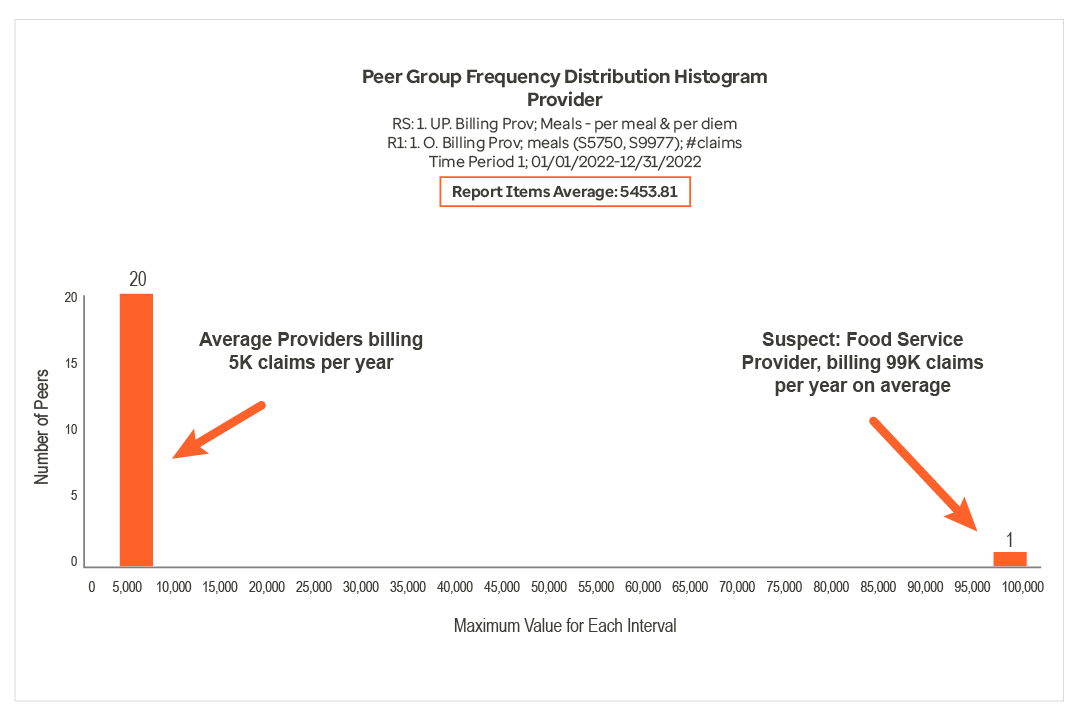
The findings from the Personal Care Service While Inpatient algorithm prompted the team to run a second report, a Peer Group Study to compare the vendor’s claims to the average claims for other meal delivery providers.

The Peer Group Study found:

  • Among its 50 peers, the vendor in question was the only outlier excessively billing above average for meals and preparation.
  • The average across the peer group was 5,453 claims. The vendor had 99,264 claims in 2022 and grew to 1,016,696 claims in 2024. 
  • This was a 924% increase within 3 years and a significant variance from the peer group.

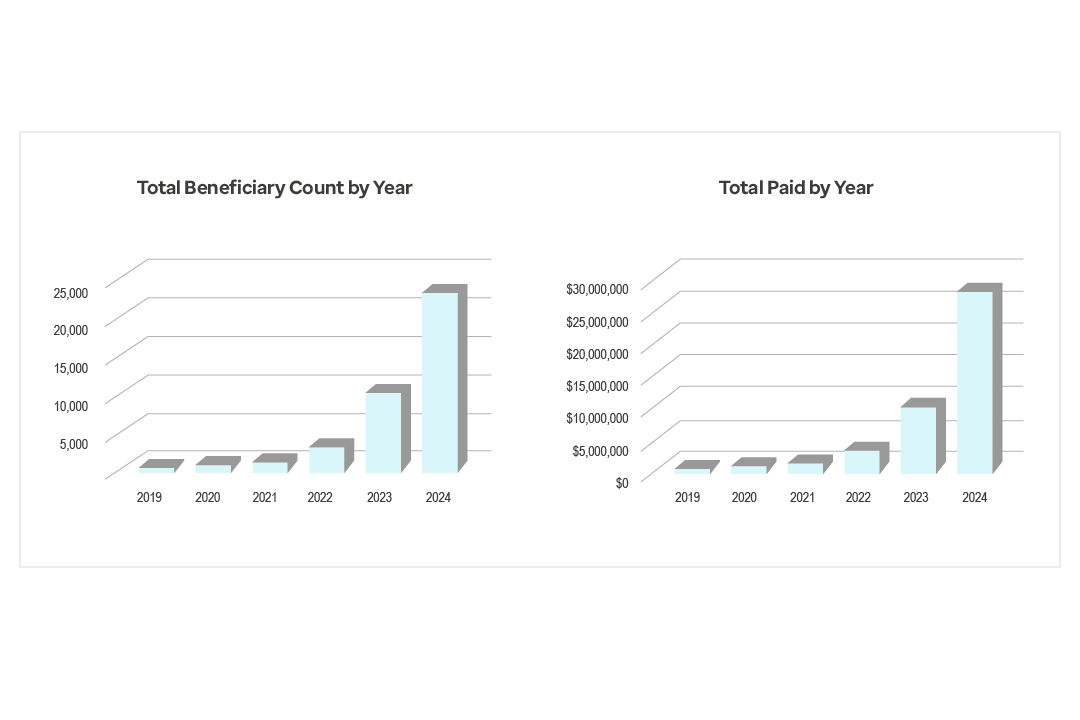
The data revealed:

  • A beneficiary increase from 4,114 to 25,186 (a 512% jump) 
  • An increase in payments to the meal delivery vendor from $2.8 million in 2022 to $9.4 million in 2023 and $27.1 million in 2024

Greater power to detect fraud, waste and abuse

Optum partners closely with states, working collaboratively to provide focused analytics on a quarterly basis. States are empowered to proactively monitor and safeguard their Medicaid programs, ensuring beneficiaries receive quality services while supporting efforts to detect and prevent fraud, waste and abuse. The partnership fosters transparency, trust and shared success in meeting each state’s unique needs.

“We share our findings with states, and then those agencies decide how to proceed with the information,” explains Ulyana Peychev, senior manager, Business System Analysis at Optum. “They could potentially refer it to Medicaid Fraud Control Units, submit a Credible Allegation of Fraud Case, send a referral for an internal investigation or request more information.” 

The research also provided important information for other states about the vendor's operations in their areas. The vendor’s parent company was sued in 2023 for breaching the personally identifiable information and protected health information of 1.2 million individuals who used the vendor's services.

Due to the data breach, the parent company is no longer providing services in some states.

Analytics give states greater power to detect fraud, waste and abuse. 

“An algorithm compares millions of claims and quickly identifies the outliers,” explains Peychev. “If you were doing this work manually, you might not always catch the improper payment. And that’s because the algorithm captures all of the data from the entire electronic data warehouse, going far beyond the few claims that you may have on your desk.” 

Related healthcare insights

View all
Meet Ben: A Home & Community Member Journey [Infographic]

Infographic

Coordinated care, every step of the way

Follow Ben's story from the day of his surgery to his recovery at home and see how Optum Home & Community is helping improve the lives of patients.

First Oral GLP-1 Drug for Weight Loss [Report]

Report

First oral GLP-1 drug for weight loss

Explore 3 new drugs for chronic conditions including obesity, severe asthma and hives (also known as urticaria).

E-book: Level Up Your Surgical Savings

E-book

Level up your surgical savings

Discover game-style strategies and real-world case studies for reducing surgical costs and standardizing supply use with Crimson AI.