
Just before Annual Enrollment Period (AEP) kicked off in 2025, I moderated a webinar, "Navigating the Annual Enrollment Period: Best Practices and Key Changes," with plan experts from an Optum customer. We discussed the critical importance of thorough preparation and strategic planning for health plan leaders and offered best practices to ensure a successful season. Now that the 2026 AEP is behind us, let’s look at how well your organization did and set you up to succeed in the plan year ahead. Use this checklist to help you assess your performance:
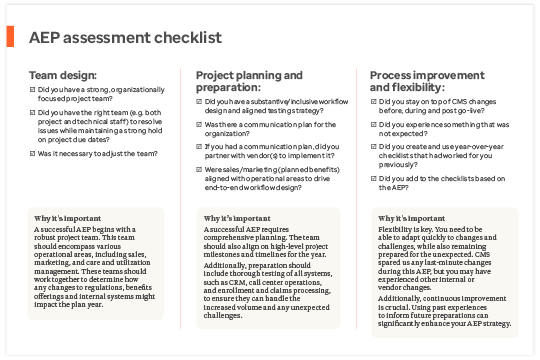
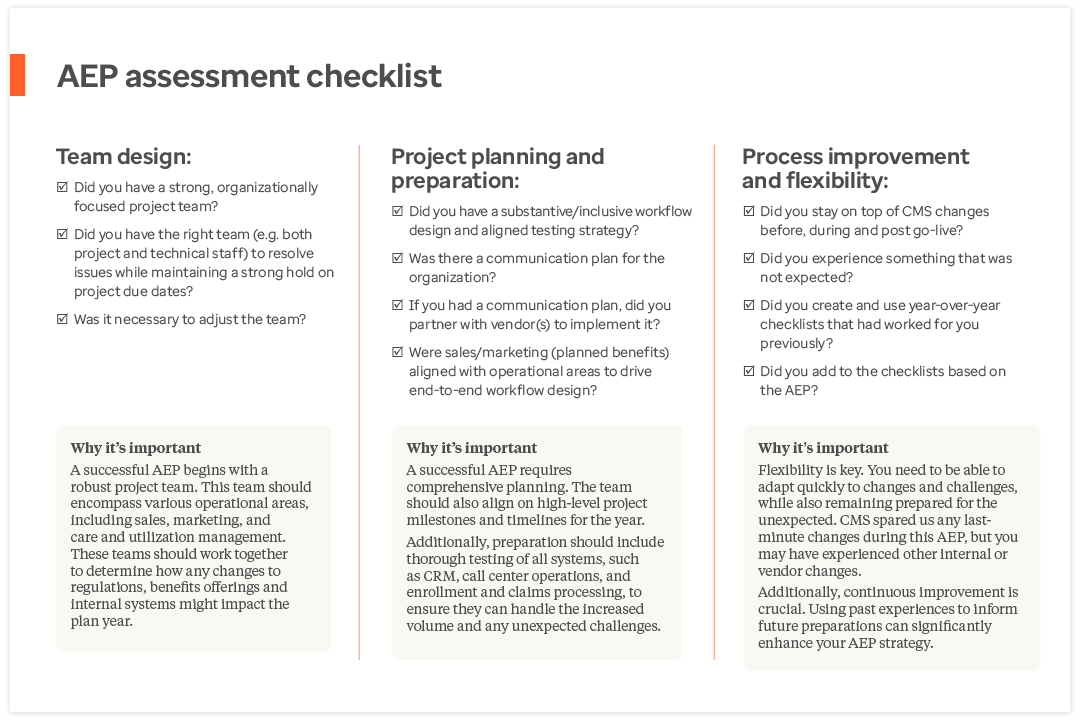
AEP assessment checklist
Team design:
- Did you have a strong, organizationally focused project team?
- Did you have the right team (e.g. both project and technical staff) to resolve issues while maintaining a strong hold on project due dates?
- Was it necessary to adjust the team?
Why it's important
A successful AEP begins with a robust project team. This team should encompass various operational areas, including sales, marketing, and care and utilization management. These teams should work together to determine how any changes to regulations, benefits offerings and internal systems might impact the plan year.
Project planning and preparation:
- Did you have a substantive/inclusive workflow design and aligned testing strategy?
- Was there a communication plan for the organization?
- If you had a communication plan, did you partner with vendor(s) to implement it?
- Were sales/marketing (planned benefits) aligned with operational areas to drive end-to-end workflow design?
Why it's important
A successful AEP requires comprehensive planning. The team should also align on high-level project milestones and timelines for the year.
Additionally, preparation should include thorough testing of all systems, such as CRM, call center operations, and enrollment and claims processing, to ensure they can handle the increased volume and any unexpected challenges.
Process improvement and flexibility:
- Did you stay on top of CMS changes before, during and post go-live?
- Did you experience something that was not expected?
- Did you create and use year-over-year checklists that had worked for you previously?
- Did you add to the checklists based on the AEP?
Why it's important
Flexibility is key. You need to be able to adapt quickly to changes and challenges, while also remaining prepared for the unexpected. CMS spared us any last-minute changes during this AEP, but you may have experienced other internal or vendor changes.
Additionally, continuous improvement is crucial. Using past experiences to inform future preparations can significantly enhance your AEP strategy.
As you look back on AEP, you may have experienced some of these challenges, and that’s OK. With a thorough review of what went well and what needs improvement, you can be better prepared for next year and the years ahead.