[MUSIC PLAYING AND CONTINUING IN THE BACKGROUND THROUGHOUT THE VIDEO]
[Beth Merle walking through an office lobby]
[On-screen text: Driving total population health at lower cost]
[Split screen, Beth walking through an office lobby and data on a computer screen of information on scrips to process, scripts to receive]
BETH MERLE: Something has to give. We have a set of providers that are looking to deliver high quality care to their patients.
[Split screen, close up of Beth’s feet walking and data on a computer screen of information on scrips to process, scripts to receive]
We have payers, the government, individuals, employers who are responsible for paying for care and absorbing the rising cost of care.
[Beth putting her bag on an office table and taking out work materials]
It creates a complex ecosystem and web where everyone is trying to do the right thing.
[Beth working at her laptop]
But we have a set of misaligned incentives that are getting in the way of delivering the best outcomes at the right cost, with the right patient experience. In the US health care ecosystem, costs are rising dramatically. And yet, with the right incentives in place aligning stakeholders, we have tremendous opportunity to drive total population health at lower costs.
[Beth walking onto a studio set and sitting down to talk]
[On-screen text: Beth Merle, Senior Vice President, Value-Based Care and Provider Enablement Optum Insight]
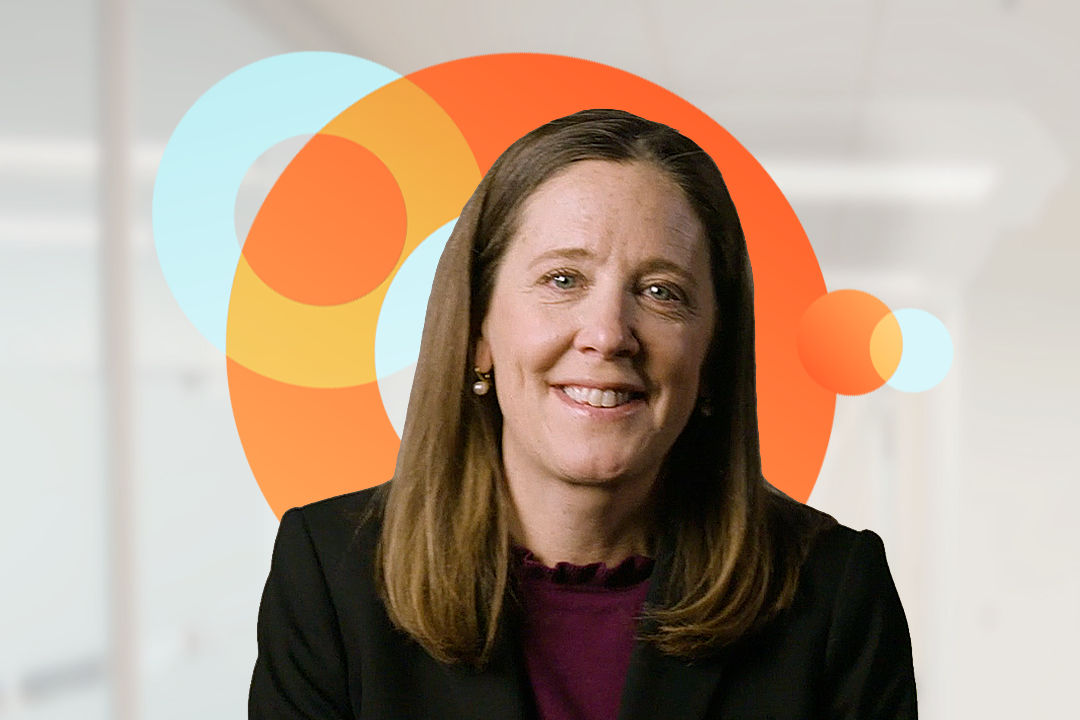
I'm Beth Merle. I lead our value-based care and provider enablement product portfolio within Optum Insight.
[Beth speaking on screen]
My portfolio is oriented to building tools that support both payers and providers in delivering on value-based care. Taking on value-based care is a large endeavor. It requires data, it requires insights, it requires infrastructure, and it requires deep expertise. Oftentimes, all of that expertise and infrastructure doesn't sit in one place, so the best way to deliver on value-based care is through partnership, through bringing in the right expertise in the right places to be able to support that. We've just launched Value Connect and it's an end-to-end technology suite. Everything from care coordination and medication management to risk and quality improvement to understanding their value-based care contracts to drive financial performance, all in one tool. So really think insight to action. Success overall means improved outcomes and enhanced patient experience by providing providers and practices with the right insights on their population, ensuring the right follow up visits are scheduled, ensuring medications are refilled when they need to be refilled. Doing all of those things comprehensively, we see in our ACO, lower pharmacy costs, lower readmissions, less ER visits, all markers of better health and lower cost. It is making what is a complex system, simpler. And that's going to drive adoption of value-based care, which I truly believe will improve health care, from an outcomes perspective, overall. That's exciting to me and what keeps me here and motivated, solving complex problems and being in a place where I feel like we can really solve them and make a big impact.
[On-screen text: Improved outcomes. Lower cost. Better patient experience. Always innovating]
[On-screen text: Optum]